

I took a plan, execute, review, and improve training course for new statisticians in clinical trials when I was beginning my career that included a lecture on the role of the statistician in clinical trials. Years later, I was a faculty member for the same course and gave the same lecture to a new cohort of clinical trial statisticians. What follows is advice drawing on that lecture and lessons accumulated over the years.
- Understand the research question; ensure it is the right one.
- Work hard at finding and understanding the question before searching for answers.
- Place increased interest on questions of a pragmatic origin. These are the most important questions for patients and clinicians.
- Be inquisitive.
- Be a detective.Ask a lot of questions before answering one.
- It is better to know how to learn than to know. Go beyond what into why.
- Be thoughtful.
- Do not rush your answers.
- Think about a problem and develop your own ideas for solutions before researching how others have approached it. This is how novel thinking begins.
- Protect scientific integrity. Clinical trials are our strongest tool.
- Be motivated to do things better rather than faster and cheaper.Strive for objectivity, robustness, and transparency.When sacrifice is necessary, and sometimes it is, sacrifice quantity based on feasibility while protecting quality. Otherwise, we will be unable to fully understand the evidence.Identify options and their pros and cons.Learn to distinguish innovations advancing science vs. compromises advertised as such. It is better to walk alone than in a crowd going in the wrong direction.
- Voice scientific opinions. Ensure they are well rationalized.
- Educating yourself and others is never-ending.
- Keep learning. Science does not stand still.Own and learn from your mistakes.Know the statistical literature.Know the medical literature. Interpret it critically.Tactfully teach others regarding clinical trial concepts and sound approaches.Educate colleagues about what you do and learn from them about what they do.Find mentors. Use your references and resources.Develop a library of key papers about different topics in the design, monitoring, analyses, and reporting of clinical trials.
- Participate in professional societies, attend professional meetings, and take short courses.
- Keep developing content of character.
- Pretend to be the best person you can imagine; you will become that person.Find opportunities for others.
- Be proactive.
- Develop effective communication skills.
- This involves listening, writing, speaking, and presenting.Tailor to your audience.Avoid being isolated.
- Learn to explain complicated ideas in simple ways.
- Finish the job.
- The goal is to understand the results, not simply obtain them. Thoroughly understand and help others understand the result.
Learning statistics is one thing. Learning to be a statistician is another.
Becoming a statistician is not like learning the state capitals or a collection of methods that can be checked off as completed. Being a statistician is as much a road as a destination. We are a critical part of team science, collaborating to improve the lives of our fellow humans through sound, principled, high-integrity research. Developing the nontechnical skills along with the technical skills is critical for maximizing our important contributions.
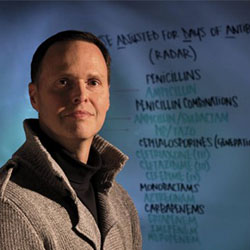
Scott Evans
The George Washington University
Editor’s Note: A version of this article originally appeared in the ASA Biopharmaceutical Report.
Leave a Reply