

American Statistical Association sections offer opportunities to take on leadership roles, facilitate connections with industry professionals, and explore career paths. We invited section chairs to share their experiences—why they joined an ASA section, what they’ve gained, and what they think others can take away from getting involved. Read on for their insights.
Quality and Productivity Section

John Szarka III
Quality and Productivity Section Chair
What motivated you to join your section?
As a graduate student at Virginia Tech, I became aware of joining Q&P. The department has a great reputation in industrial statistics, which matches well with the Q&P section.
What do you enjoy most about being part of your section?
I’ve grown a great network from meeting folks as part of Q&P. It’s a nice blend of academic, government, and industrial statisticians that have great, practical insights into problem solving using statistics.
How has section membership benefited you professionally and/or personally?
We have great conferences such as the Quality and Productivity Research Conference and the Fall Technical Conference, which we cosponsor with other sections and societies. They are smaller, more intimate conferences that have a lot of implementations of newer statistical methods that have been used on real problems. It’s really inspiring to come out of those conferences motivated and apply what I’ve learned to my work at Gore.
What advice would you give to new members for getting the most out of their section membership?
You can easily grow your network by seeking out volunteer opportunities in your section. This will plug you in with the other officers and, during your service, it is rewarding to contribute to the success of your section, which can lead to even more opportunities. If you’re active on LinkedIn, connecting with your fellow officers and members gives you more insight to conferences, workshops, webinars, and jobs that you might otherwise not have been aware of.
Will you tell us about your favorite section experience?
Back when I served as program chair, we met in person for JSM program responsibilities. It was really energizing to be in the room with folks from all the different sections and be at ASA headquarters. I enjoyed taking selfies by Deming’s office, as well.
Statistics in Epidemiology Section

Veronica Berrocal
Statistics in Epidemiology Section Chair
What motivated you to join your section?
I joined SIE under recommendation of a peer who did her PhD in the same institution I did my PhD, who was an officer of the section. She pointed out to me that with me working more and more on epidemiological problems, it made sense that I become a member of the section so that I could participate in their events, etc. So, as it was not that expensive, I followed her advice, and I did join the section.
What do you enjoy most about being part of your section?
I have to be honest that, when I joined, the section was more active and used to run things like the speed breakfast mentoring event at JSM where junior statisticians (PhD students, postdocs, and junior faculty) would have a breakfast and chat with multiple senior statisticians—members of the section who volunteered to do so. The breakfast event was a success, many people enjoyed it, and I think it provided a great service to the section. I believe with COVID and change among the officers, this tradition was lost. It was too late to plan to organize it for JSM 2025, but I am thinking to maybe offer a hybrid version of this during the fall months.
How has section membership benefited you professionally and/or personally?
Mostly, I think it has provided an opportunity to network, get to know people outside of my department or the other communities I frequent more often—that is the Bayesian and the environmental community. It has allowed me to get to know about certain opportunities that I wouldn’t have been aware of otherwise.
What advice would you give to new members for getting the most out of their section membership?
I think engaging with the section leadership is key, especially as people get busy and it gets easy sometimes for officers to become complacent and not really follow through with what their task and responsibilities as an officer of the section are. So, reaching out to section leadership and making suggestions or asking questions is a way for members of the section to ensure the section can actually be of service to them and provide them with everything they need (that the section can actually provide).
Will you tell us about your favorite section experience?
Yes, I think my favorite section experiences are the speed mentoring breakfasts and the JSM mixers.
Health Policy Statistics Section
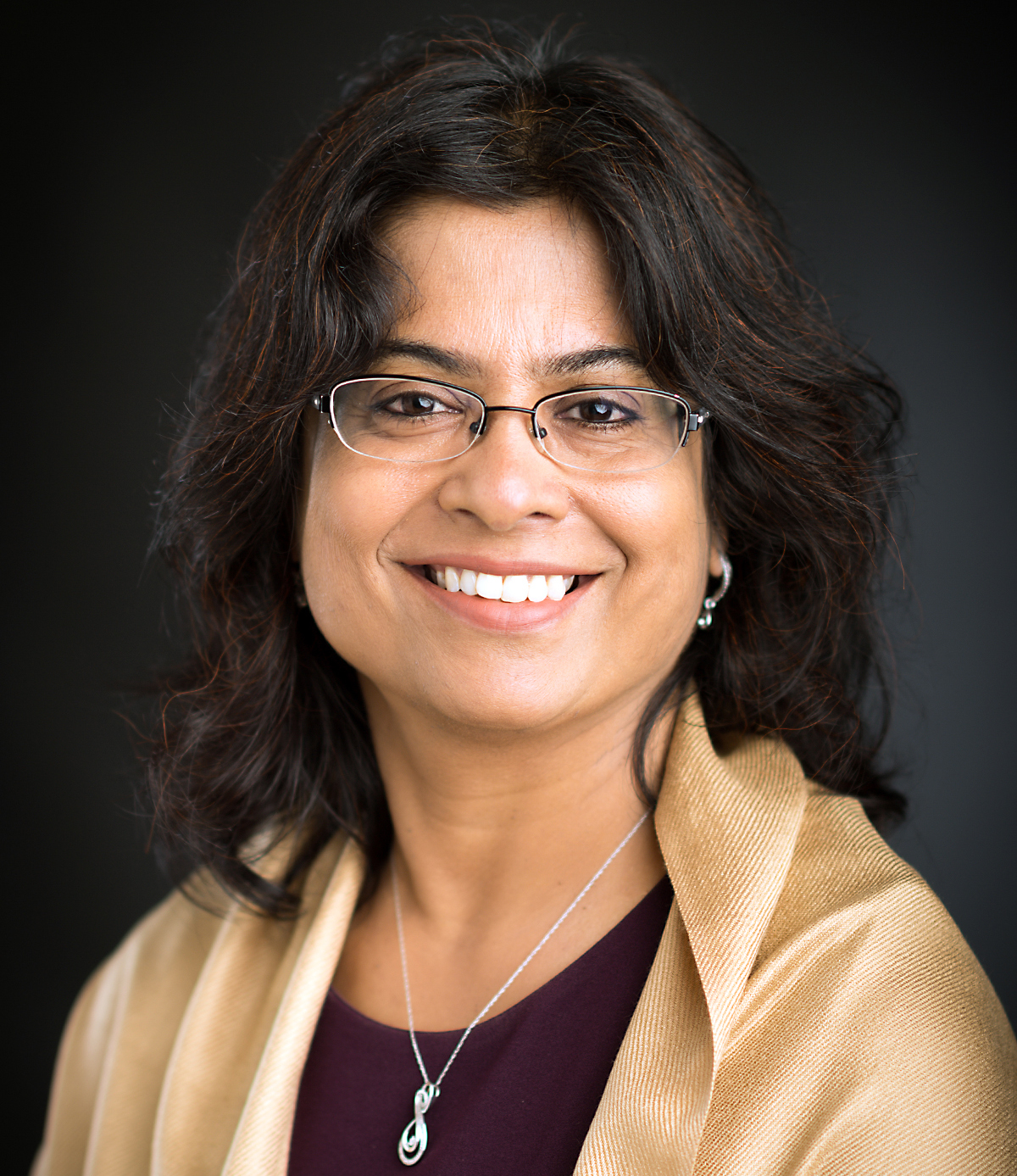
Mousumi Banerjee
Health Policy Statistics Section Chair
What motivated you to join your section?
Since childhood, I loved numbers. I don’t know exactly where it came from. My father was a professor of English literature, and my mother taught Bengali language. I grew up listening to my father recite Shakespeare, Shelley, Keats, and Byron and spending long summer afternoons reading Tagore and other authors of the Bengali Renaissance period.
A high school teacher introduced me to the beauty of mathematics. Calculus was my favorite subject, and the concept of limit going to infinity fascinated me. The commonality between literature and mathematics intrigued me most. Both are rooted in the actuality of our world while taking our imaginations far beyond. Both demand intense creativity. Understanding pi or infinity takes a tremendous leap of imagination. As Einstein remarked, mathematics is the “poetry of logical ideas.”
Throughout my adolescence, I spent hours doing mathematical puzzles for fun. I took a statistics class and loved it¾and was even hailed as the math “genius.” I followed my teacher’s suggestion to study at the Indian Statistical Institute (ISI) in Kolkata and was the only female in a cohort of 22 math geniuses. In that pool of incredibly talented students, my confidence took a hit. I knew I had much work to do.
As I was embarking on my graduate student life in the US, I realized my view of statistics as a field had been quite narrow. Far beyond probability puzzles, the fun of statistics—with its profound mathematical underpinnings—is how data can speak through thoughtful, rigorous analyses applied to real-life problems. At first, I would panic at the thought of having to work with messy real data that did not conform to textbook examples, but with experience came understanding and purpose. Fresh out of graduate school and as a faculty member at Wayne State University, I was the lone statistician working on a National Institutes of Health-funded prostate cancer initiative. I sat in the weekly meetings with two dozen medical doctors wondering how I could do statistics for them without understanding what they were talking about. I knew I had two options—quit or learn the language. I began sitting in on health science classes, shadowing clinician colleagues, and doing extra reading to understand the science.
It paid off, and my career in biostatistics began to flourish. Empowered by sound statistical knowledge, I became more and more fascinated by the role of data to tell a story! Early on in my career, I became involved with the then Detroit’s Surveillance, Epidemiology, and End Results cancer registry, one of the oldest population-based cancer registries in the US. Using the uniquely large African American population in Detroit’s registry, we conducted vital research on racial and ethnic disparities in cancer care and outcomes, developing church-based screening programs for early detection, understanding the role of race in survival, and designing studies to disentangle the effects of cancer biology from the impact of socioeconomic status and access to care on outcomes.
In the Spring of 2021, I traveled to India to get my octogenarian mother vaccinated. The devastating COVID‑19 surge that crippled the entire health care system of India unfolded right in front of my eyes. I witnessed firsthand the stories of suffering behind the “numbers.” It was the first time I truly saw the human side of data—a moment that profoundly reshaped how I frame my statistical work as a tool for health equity and real-world policy impact.
To this day, my statistical research continues to be inspired and motivated by real-world health challenges and inequities. I study variations in health care delivery and outcomes in the population. My long-standing commitment to improving health care quality and reducing disparities—particularly for women and underserved populations—naturally drew me to the Health Policy Statistics Section. The section’s focus on work that directly informs health policy matches my drive to turn statistical rigor into practical equitable outcomes. Furthermore, HPSS’s mission aligns with my professional ethos and offers a platform to amplify policy impact of my work, and that is why I joined HPSS.
What do you enjoy most about being part of your section?
There are a lot of things about HPSS that I enjoy! First and foremost, it is the people¾the membership of our section! HPSS brings together statisticians, data scientists, policy analysts, and public health professionals all working together to improve population health through evidence and innovation. This is meaningful team science at its best! I cannot emphasize enough how powerful it is to co-develop statistical solutions within multidisciplinary teams, especially for pressing health policy questions. Plus, we are a fun and collegial group. It feels great to do good science with good people!
I also enjoy the blend of real-world impact and methodological innovation that the Health Policy Statistics Section enables. HPSS offers a stage for research to drive policy changes. That sense of purpose—making data speak to improve health outcomes and policy—is also the heart of what I enjoy about HPSS.
How has section membership benefited you professionally and/or personally?
Being part of HPSS has contributed tremendously to my professional growth, as well as personal fulfillment in many ways.
I had been deeply involved across ASA and other professional association structures—committees, chapters, and other sections—for years. Chairing HPSS offered me a platform to harness that experience and amplify impact, fostering innovative methodologies, mentoring, and cross-disciplinary outreach, which I am passionate about.
In my earlier tenure as JSM program chair-elect/chair for HPSS, I was in charge of selecting student paper awards, invited and topic-contributed sessions, roundtables, and speaker with luncheon sessions. These diverse roles and responsibilities gave me a sense of the depth and breadth of our section. It also helped foster many connections across the statistical community that became long-term professional friendships.
As section chair, I learned about the financial side(s) of running an organization, brainstormed about fundraising initiatives to support our flagship conference ICHPS [International Conference on Health Policy Statistics], appointed new task forces, took actions to amplify early-career voices, fostered mentorship of junior members, and connected with a purpose-driven community. Several of these were new territories for me and required me to step outside my comfort zone. I am especially grateful to have the opportunity to leverage the HPSS network to connect with global partners on shared learning of data, methods, and policy surrounding health care delivery and outcomes.
What advice would you give to new members for getting the most out of their section membership?
Attend section events and present your work (take advantage of section‐sponsored sessions and mixers at JSM)—whether you are presenting research or participating in discussions, it’s a great opportunity to gain feedback and connect with others. For HPSS members, attend ICHPS and other section-focused events.
Engage actively and voluntarily in section activities. Volunteer to propose, organize, chair sessions at professional meetings; get involved with program planning; review student award competition papers; and join committees and task forces whenever the opportunity arises. These are all powerful ways to build visibility, showcase your skills and commitment, and deepen connections with the section.
Leverage the section to build a network for collaboration and mentorship. Reach out to section leaders for mentorship around research, career planning, or navigating career issues. Bring your own ideas—propose new session/workshop themes, scholarships, outreach initiatives. Even if you are early career, your fresh perspective is valuable to the community.
For HPSS members, challenge yourself to work with complex observational data—policy‑oriented, health care delivery data sets—which is what HPSS is built around. Use the section as a sounding board for methodological questions. These often lead to impactful collaborations and long-term professional connections. Use HPSS connections to partner with clinicians and policymakers—these interdisciplinary relationships can elevate both the scope and impact of your research.
Will you tell us about your favorite section experience?
My favorite section experience is always about recognizing excellence in ceremonial and celebratory events that highlight individual members’ contributions to the field. In particular, I would like to mention the recent ICHPS 2025 in San Diego, where I presented the HPSS Mid-Career and Long-Term Excellence awards to three phenomenal colleagues.
The HPSS Mid-Career Award is presented to a recognized mid-career leader in health care policy and health services research who has made outstanding contributions through methodological or applied work and demonstrates promise of continued excellence at the frontier of statistical practice that advances the aims of the Health Policy Statistics Section. Two were honored with this award this year: Miguel Marino, professor and biostatistician in the department of family medicine at Oregon Health & Science University, and José Zubizarreta, professor in the department of health care policy at Harvard Medical School and the department of biostatistics in the Harvard School of Public Health.
The HPSS Long-Term Excellence Award is given to an individual who has made significant contributions to health care policy and health services research through mentoring and/or service that advances the aims of the Health Policy Statistics Section. This year’s award recipient was Lisa Lix, professor of biostatistics in the department of community health sciences at the University of Manitoba, Canada. Dr. Lix is a Tier 1 Canada Research Chair in Methods for Electronic Health Data Quality and director of the Data Science Platform in the George & Fay Yee Centre for Healthcare Innovation at the University of Manitoba. The award recognized her multifaceted talents and contributions, dedication, leadership, and research acuity, but, more importantly, her generosity in mentoring, collaboration, and service to further the missions of the Health Policy Statistics Section. Being involved in the selection process and leading the recognition ceremony was a favorite section experience and a particularly meaningful highlight for my chair role.
Leave a Reply