
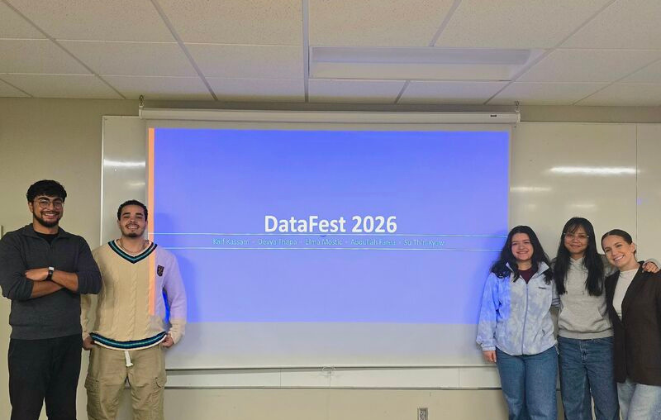
By Kristin Mohebbi, ASA Donor and Partner Relations Officer
What can students discover when they have 48 hours, millions of rows of real-world data, and a question that matters?
At ASA DataFest 2026, students from 128 institutions—including a record 15 international institutions—spent a weekend finding out. Students in statistics, mathematics, business, biology, computer science, and more came together to tackle complex problems, learn from mentors, and turn data into stories others could understand.
For Isabella Delmonte, the experience became a lesson in what makes data science meaningful. Her team began with messy datasets and countless possible directions. Instead of choosing a project simply because it could showcase a technical skill, they stepped back and asked a different question: What actually matters to the people this data represents?
That question led them to a real-world legislative debate affecting the region represented in their data. The team built a project to simulate the potential impact of proposed legislation, learning new methods along the way and spending hours reconciling datasets that were never designed to work together. Their work ultimately earned Best in Show at the ASA Five College DataFest.
The experience reinforced a lesson Isabella hopes to carry into her career: Technical skills matter, but they are most powerful when they are directed toward questions that affect real communities.
She was not alone.
At Macalester College, Elma Mostic’s team examined how geography and access shape real-world outcomes, winning Best in Insight while sharpening their skills in R and data communication.
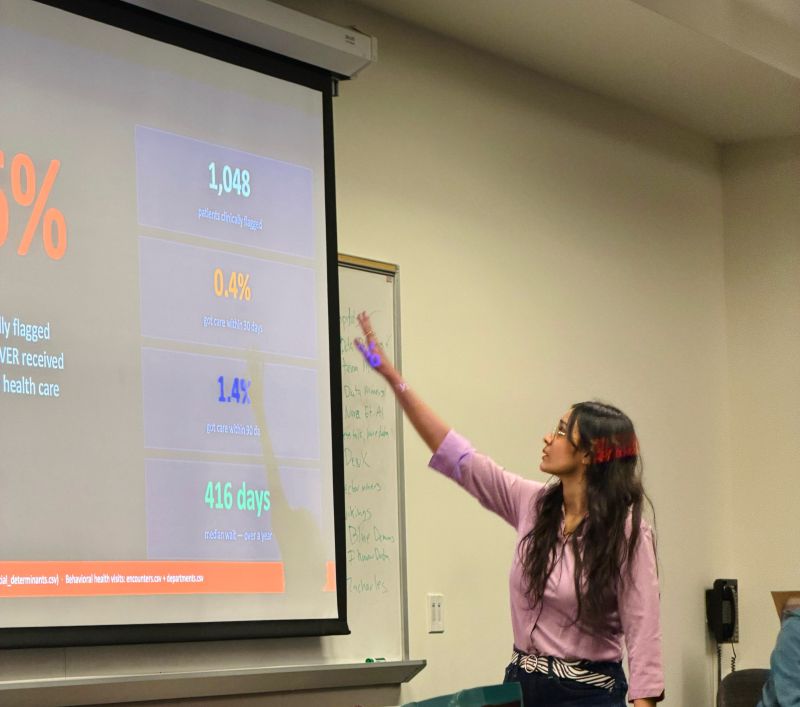
And in one of the weekend’s most sobering findings, Debosmita Sarkar’s team combed through 7.6 million rows of mental health data and discovered that 86% of patients flagged for depression never received care, with a median wait time of 416 days.
“Data science is at its best when it identifies system failures and provides a roadmap for real-world solutions,” said Sarkar.
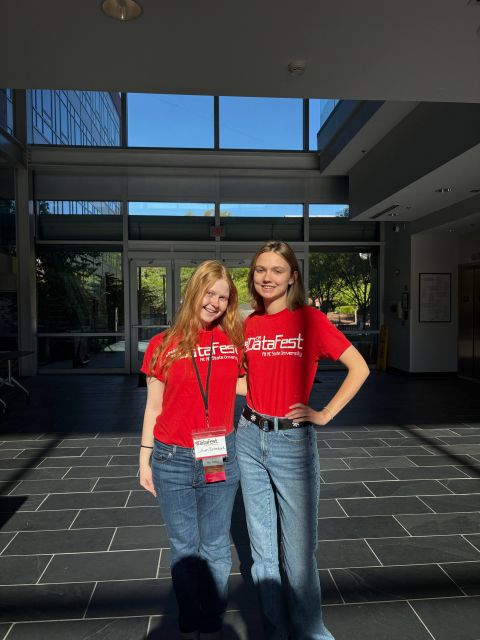
For students like Jenna Abernethy, DataFest becomes more than a weekend competition. Her first DataFest in 2023 helped spark a passion for data science that led to leadership in her university’s Data Science Club and opportunities to apply what she learned professionally. Four years later, she returned for her final DataFest and earned the Data Insights Award with a team whose different backgrounds strengthened their collaboration.
Across DataFest, which is supported by donations to the American Statistical Association, students are not simply learning how to analyze data. They are learning how to ask better questions, work across disciplines, navigate uncertainty, and communicate findings clearly enough for others to act on them.
That is also what makes DataFest a community. Students learn from teammates. Mentors guide them through unfamiliar problems. Judges evaluate not only technical approaches, but how effectively students communicate what they discover. In 2026, that community extended across borders, with collaborations connecting students in the United Kingdom, South Africa, Australia, and beyond.
Leave a Reply