
Regina Nuzzo and Kristin Sainani
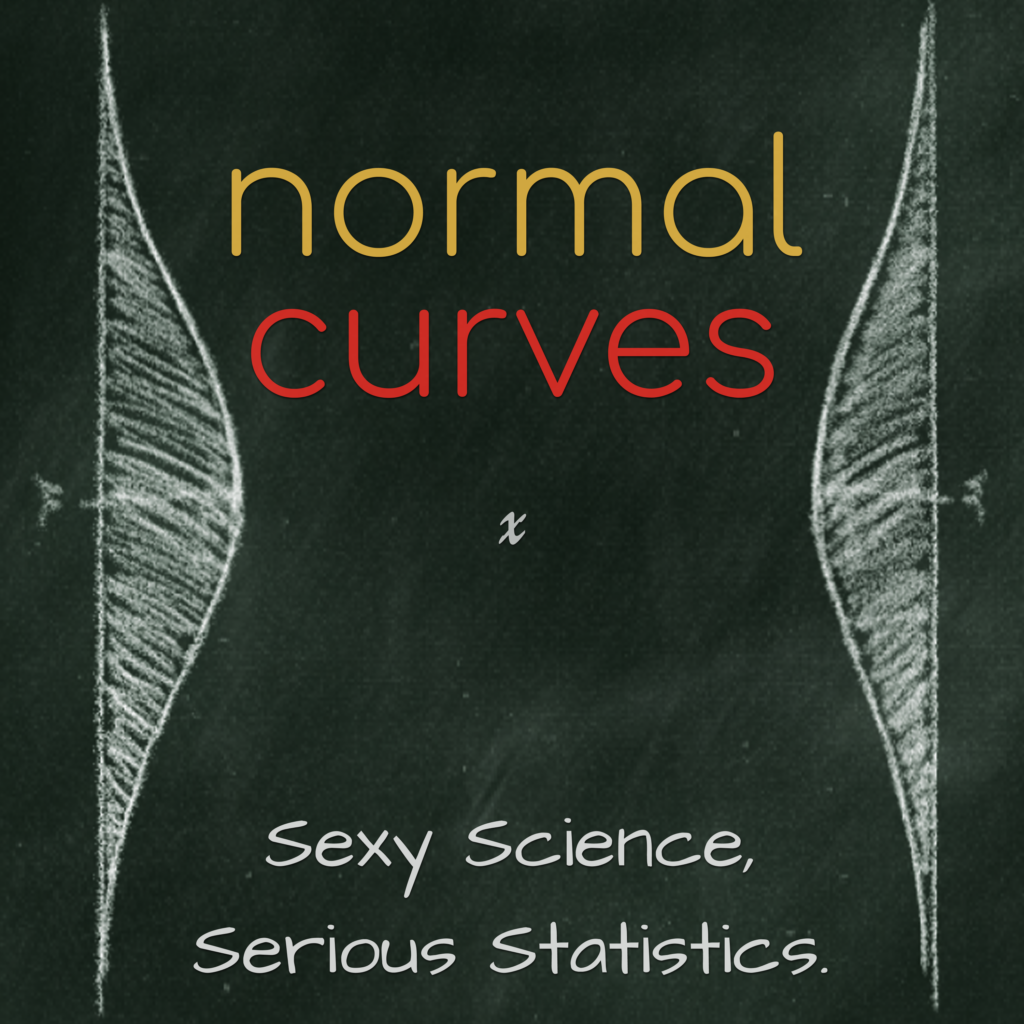
“A podcast about sexy science and serious statistics.” That’s the tagline of Normal Curves, a new statistics podcast from two professors, Regina Nuzzo at Gallaudet University and Kristin Sainani at Stanford University. The co-hosts say they set out to blend humor, irreverence, and statistical rigor to help people understand the evidence behind headline-grabbing scientific claims.
“I’d say the show is equal parts data sleuthing detective story, science journal club, and statistics seminar, plus jokes and stories from our lives,” Sainani said.
The friendly on-air chemistry is genuine. Nuzzo and Sainani have been friends since graduate school at Stanford in the 1990s. “Our then-boyfriends introduced us. Luckily, our friendship and professional collaborations far outlasted the boyfriends,” Nuzzo said.

After graduation, they stayed in touch while following similar, but nontraditional, career paths on opposite sides of the country. Both blended freelance science journalism, writing for broad audiences in newspapers and magazines, with teaching statistics to undergraduate and graduate students as faculty members.
The idea for Normal Curves sprang from their students. In 2022, they created video lectures for a new graduate statistics course they co-teach at Stanford—but with a twist. Instead of traditional lectures, the videos showed Nuzzo and Sainani discussing interesting case studies and sprinkling in statistical teaching moments. “We’re also both science journalists, so we like telling stories,” Nuzzo said. “It’s a more interesting way to learn. Humans are hard-wired to learn from stories.”
The videos have been a hit. “Our students said they were watching these lectures instead of Netflix on Friday nights and actually having fun,” Sainani said. “Then they asked us if we had a podcast because they wanted to keep learning.” The idea was born, and the first episode dropped in February 2025.
Each Normal Curves episode tackles a particular scientific claim, with Nuzzo and Sainani talking through the published studies to help listeners evaluate the evidence behind the claim. For inspiration, they often turn to their own past science journalism articles, which have included topics such as health, beauty, sex, and relationships. “We cover topics that we ourselves have written about or are interested in,” Sainani said.

For recent episodes, they’ve investigated whether eating too much sugar gives you wrinkles, if high-carb fueling is the key to better marathons, and whether mild fear increases sexual attraction. It’s part of their teaching strategy, Nuzzo said. “We decided our secret motto is ‘come for the sex, stay for the statistics.’”
Nuzzo and Sainani weave bite-sized statistical lessons into each episode. Recently, they explained inverse probability of treatment weighting, using an analogy with the Barbie and Oppenheimer movies. They jokingly suggested renaming the technique S-E-X (for Statistical Exception eXpansion) to make it more memorable.
In another episode, they explained linear regression with one of their own real-life bad-date stories about a man who boasted of owning seven boats. “We enjoy the creative challenge of explaining stats in outrageous and memorable ways,” Nuzzo said. “Plus, we just like making each other laugh.”
“We hope statistics teachers at all levels will recommend episodes in their classes,” Sainani said. “We try to minimize jargon and explain concepts in plain language—so introductory students can follow along—while also building intuition and showing methods in action for more advanced listeners.”
One of their recent episodes is devoted entirely to p-values, with Sainani and Nuzzo using their own papers and stories to bring the topic to life. “We didn’t think anyone would listen to 73 minutes about p-values, but it’s one of our most popular episodes,” Nuzzo said.
The show also positions itself as something of an antidote to the wave of “bro-casts”—science and health podcasts heavy on confidence and light on evidence. This stance feeds into the show’s recurring myth-busting, with episodes that take apart popular health claims—tracing their origin, how they spread, and what the data support. One episode, for example, revisited the widespread belief that “everyone is deficient” in vitamin D, with Sainani sharing her sleuthing of statistical errors in the literature. “We walk listeners through how that narrative took hold and what the data really show. The story is pretty shocking,” Sainani said.
They say they deliberately cast a wide audience net—from practicing statisticians, scientists, clinicians, journalists, and students to curious folks in the public, who just want to understand the evidence behind scientific headlines. “We love getting fan mail from our audience all over the world,” Nuzzo said. “When people tell us that this is their favorite podcast or that they’re laughing out loud while learning something about statistics, it makes it all worthwhile.”
They hope to bring out the human side of statistics and scientific evidence. Certain themes recur throughout episodes: Science is human and messy. We all have our biases. It’s easy to fool oneself with data. Good data analysis is sexy. In fact, at the end of every episode, they give listeners a “methodological moral.” Some of their favorites include “Statistical errors are like cockroaches: Where there’s one, there’s many,” and “Those who ignore dependencies in their data are destined for flawed conclusions.”
Normal Curves is now in its second season, and Nuzzo and Sainani are excited about their new lineup. Upcoming episodes may include whether too much exercise is bad for the heart; a preprint on mosquitoes and beer; a genetic test for cellulite, and more love, dating, and sex.
Leave a Reply