
How do you land your first professional job? The internet is full of advice, but we wanted to hear directly from our members about what it’s like in the statistics and data science field, so we asked them to share how they landed their first job, what they learned, and what advice they’d give to others starting out. What follows is what they had to say.
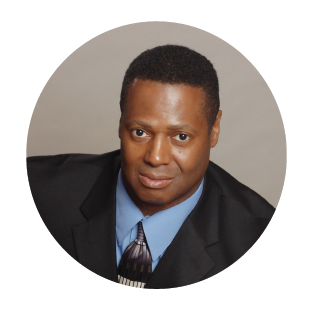
D. Anthony Miles
D. Anthony Miles is a 35-time award-winning statistician, Enterprise Review Hall of Famer, forensic marketing pioneer, legal expert witness, and six-time best-selling author. He is also CEO and founder of Miles Development Industries Corporation, a consulting practice and venture capital firm, and CMO/equity partner for Safedrop Security Delivery System product.
What was your first professional position after graduation, and how did you find it?
My first professional job after graduation was in the consumer finance industry. I was one of 15 new college graduates recruited for a branch management training program. I found this job with the help of a job search firm. To be honest, that was interesting considering I hated finance while I was in school, but I actually became good at it working in the industry. I had about 13 years of experience in the grocery retail industry. I had to put myself through college while working at a grocery store. My dad made me get a job and put myself through school. It was tough.
What skills do you believe helped you land the job?
That is a good question. I think what helped me land the job were people skills, analytical skills, leadership skills, work ethic, character, and maturity. Again, I had to put myself through college. My dad made me work for everything. He was really tough on me. He was old school. It built my character. I have been working since I was 14 years old. During my interview, I told them my story, and they were impressed. I did not expect them to be impressed. Another skill I acquired while putting myself through college was the ability to handle pressure and meet deadlines. Those were the skills that helped me.
What is your most valuable takeaway from the experience?
My most valuable takeaway would be the importance of how on-the-job skills help me embellish my academic skills at the workplace. This helped me be able to think on my feet and use my analytical skills. Another important takeaway was gaining the ability to lead a team of people in a group. This experience taught me strong communication and resourcefulness. Businesses do not just want analytical skills; they also want people skills, or soft skills, which they consider to be just as important.
Has your work changed your idea of what statisticians do? If so, how?
Yes, in terms of how work has changed my ideas of what statisticians do. I learned about statistics while I was working at the bank as a marketing analyst. I learned three important lessons. First, I initially perceived the work as just putting together reports. Boy, was I wrong. I learned a statistician’s role in disseminating data and information to management is important in the banking field. The role of a statistician—and how data and information is communicated to the end users—is important.
Second, I also discovered the strong need for communication skills. What I mean by that is this: You must learn to communicate with people by taking something complex and making it simple. That means you must explain something so well that the janitor in the room understands what you mean. I had to really learn how to do that. I was caught in my own world, showing a bunch of complex regression models that do not mean anything to the mere mortals.
Last, you have to take multivariate statistics and show how the data and results benefit them.
People do not think about anything unless they see how it benefits them. And you must show it can help them act. That is what I learned.
What advice do you have for recent graduates applying for their first job?
Great question. I am dealing with this with my two daughters. The most important advice I would give to recent graduates is, first, do not be a one trick pony. What I mean by that is you want to have both academic skills and on-the-job skills. They are two different types of skills and two very different skill sets. In my career, I have seen people who only had one of the two skill sets and it handicapped them. You want to be a double threat. I learned that from my dad, by him making me work to put myself through college. That helped me tremendously. I can’t stress that enough.
My second piece of advice is to develop a marketable and technical skill that sets you apart from everyone else. I know that is easier said than done, but learn a skill that makes you unique. Build your niche. Try to develop a skill that is highly sought after and be a genius at it if you can. When you have a skill that is sought after, it sets you apart from the herd. This is often not told to new graduates. You want people to seek you for your expertise in a particular area. That would be my advice to recent graduates.
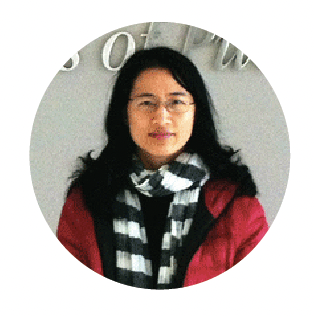
Shiling Ruan
Shiling Ruan is an experienced biostatistician with more than 15 years of expertise in the pharmaceutical industry and at the FDA. Her unique background enables her to navigate the complexities of regulatory requirements while helping pharmaceutical companies design and optimize clinical trials. She has worked across multiple disease areas, spanning early- to late-phase trials, diverse study designs, and a wide range of regulatory submissions.
What was your first professional position after graduation, and how did you find it?
I worked for a small consulting company as a statistical analyst. I found it through Indeed.
What skills do you believe helped you land the job?
Trainings in statistical methodology and programming skills.
What is your most valuable takeaway from the experience?
That job was not what I wanted. For new graduates, it would be better to go to a larger and more established organization to learn and grow.
Has your work changed your idea of what statisticians do? If so, how?
Yes. I think a good statistician should not be just doing analysis but needs to understand the big picture and be able to communicate the impact and influence the decision-maker.
What advice do you have for recent graduates applying for their first job?
Be good at what you learn and what you do. Internship is important, even if it is not paid. Or at least proactively take on interesting projects to practice and improve your skills. Practice to express yourself and your research clearly and concisely. Networking is important but the fundamentals will be the key factor to determine whether you will get the first offer.
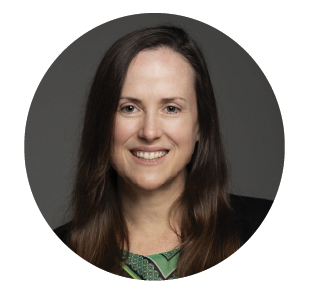
Beth Ann Griffin
Beth Ann Griffin is a senior statistician at RAND and serves as codirector of the National Institute on Drug Abuse–funded RAND/USC Opioid Policy Tools and Information Center, whose goal is to foster innovative research, tools, and methods for tackling the opioid epidemic. Her statistical research has focused on methods for estimating causal effects using observational data. Her public health research has primarily fallen into three areas: the effects of gun and opioid state policies on outcomes; substance use and mental health; and the impact of nongenetic factors on Huntington’s disease.
What was your first professional position after graduation, and how did you find it?
My first and only professional position was at RAND as a statistician. It was kind of random how I discovered RAND while on the job market. I really hadn’t heard about them until my husband (who was completing his master’s in public policy) encouraged me to attend their information session, where I completely fell in love with the organization!
I was drawn to the mission-driven work and the opportunity to apply statistical thinking to real-world policy questions. The interview process was long but also energizing. I met 15 RAND statisticians and found each one to be kind, smart, happy, and supportive of each other. I knew mentoring at RAND would be excellent.
What skills do you believe helped you land the job?
My job talk! 😊 Related, strong communication skills are key. At RAND, it is important for statisticians to be able to make technical concepts accessible and translate statistical ideas into the real-world applications that resonate with our substantive colleagues. In addition, my technical expertise and ability and desire to collaborate across disciplines were vital.
What is your most valuable takeaway from the experience?
The incredible mentorship I’ve received at every stage of my career. RAND has a culture of learning and support; people are genuinely invested in helping one another grow. The people and the problems we tackle have made this an environment in which I’ve been able to thrive both professionally and personally. I am working hard now to ensure I am paying it forward by acting as a mentor to our newest statistics group members and more junior colleagues joining RAND.
Has your work changed your idea of what statisticians do? If so, how?
Not really. I think it just confirmed my understanding of the capacity our field has to do good in the world. Statisticians are integral to shaping research questions, designing studies, and communicating results in ways that influence real-world decisions. We’re collaborators, problem-solvers, and storytellers who help connect evidence to action. I love being one!
What advice do you have for recent graduates applying for their first job?
Too much for the space allowed 😉. First, take time to explore a variety of opportunities to get a sense of what’s out there and where you’ll thrive. Pay attention to morale and how people treat one another. Ideally, you want to work in an environment in which colleagues support each other and the work energizes you. Don’t be afraid to ask about mentorship, professional development, and work-life balance during interviews. The right fit isn’t just about the job title; it’s about finding a place where you can grow, contribute, and feel valued.
Leave a Reply