
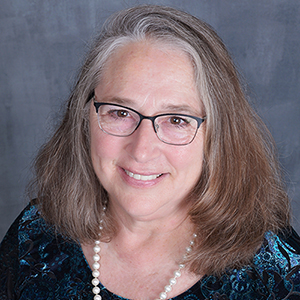
Statisticians and data scientists truly have the power to change the world for the better. Throughout the COVID-19 pandemic, statisticians, like Kathy Ensor, conducted crucial data analysis to inform real-world public health decisions. And that’s just the beginning!
In addition to her work teaching the next generation of statisticians at George R. Brown School of Engineering at Rice University and at the Center for Computational Finance and Economic Systems, Kathy is the creator of the Kinder Institute Urban Data Platform and is actively working with the City of Houston Health Department. Recently, her work has entailed using statistics to analyze wastewater data. This information is used in the development of solutions for managing the COVID-19 pandemic.
Although she is busy shaping the lives of others, Kathy also served as the President of the American Statistical Association for the 2021–2022 term.
We sat down with Kathy to discuss her work in influencing public health decisions and what inspires her work as statistician and professor.
Tell us one way that statistics and data can help improve our cities.
In the city of Houston, we collect wastewater data to understand the level of SARS-CoV-2 in our community. And that has been a tremendous help to the Health Department’s strategies for helping our citizens and our residents manage this pandemic. And it’s been a really successful effort.
What is the one kind of data you wish cities collected?
Over the last six years, I’ve committed a lot of my time to creating what we call the Urban Data Platform for the Greater Houston area. And this is a data repository of all kinds of data about Houston, about its people, about its buildings, about its infrastructure, about its resources, its pollution. So all of this data resides in one place, and it serves a very important role in helping us answer key questions for the region. But on the flip side of that, we also want to be concerned about data privacy. And I’m very big on data privacy. You know, I always say, well, individually, what do I want people to know about me?
What is your favorite way of explaining the Monty Hall Game Show Strategy?
Maybe a decade ago or so, I taught one of my favorite undergraduate classes: probability and statistics for civil engineers and environmental scientists. So just a fun group of people to get in a room. And I actually give them … they have to do a presentation on a topic of their favorite choice. And so the team, there was a team that took on the Monty Hall problem. And their presentation was just absolutely fabulous because they built a little mockup of the stage and they stood there and actually demonstrated the idea of conditional probabilities. It was just such a beautiful experience. And those young people have now gone on to fabulous careers.
What inspires you?
I am inspired every day getting up. Just knowing that the community that I’m a member of, I really spend a lot of time thinking and doing statistics and interacting with the community and using the life learning that I’ve established to try to help in some way the world be a little bit better place. And so I think that’s sort of a daily inspiration that never leaves me. And if it isn’t there in the morning, then I text one of my great statistician friends and they sort of remind me of our shared vision and shared goals.
Leave a Reply