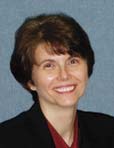
 Katherine L. Monti is Principal Statistical Scientist at Rho, Inc.
Considering a career in biostatistics? If you like math and biology and want to make a difference in the world, this is a good plan. Biostatistics is a rewarding career, with a lot of opportunity—and the compensation is good, too.
How does one prepare for a career in biostatistics? There is no one “right path” to becoming a biostatistician, just as there is no one career path in biostatistics. Nonetheless, here are some general suggestions that should help someone considering a degree in biostatistics, whether starting such considerations in high school, college, or later on.
High School: If you are thinking about biostatistics as a career and you are still in high school, excellent! Take as much math as you can and do your science homework. If you have the opportunity to take a technical writing class, go for it. Learn some programming along the way if you can. Check the web for undergraduate degrees in biostatistics to see if any of those programs appeal to you, and see what the requirements are. If biostatistics was not on your horizon in your teens, no worries—you have plenty of time.
Undergraduate School: If you plan on a degree in biostatistics, do you need to major in biostatistics as an undergraduate? Not at all. In fact, most of us did not. You do not even have to be an undergraduate math major, although most graduate schools will require a strong math background. So plan on three semesters of calculus, a semester of linear algebra, and introductory probability and/or statistics as a minimum, with real analysis and advanced calculus required for some programs.
What other types of courses should you take as an undergraduate? Many graduate programs in biostatistics recommend biology, epidemiology, ecology, or other science courses. I personally wish I had taken college chemistry; it would have helped me in every job I have held since graduate school. If you have not yet done so, it would be useful to learn a programming language or statistical package. I had one colleague who swore a course in logic was an invaluable aid to him, but I imagine few statisticians have taken logic in college.
What Is Biostatistics?
Biostatistics is the science of obtaining, analyzing, and interpreting data using statistical theory and methods to address problems in the biological and health sciences. Unlike departments of statistics, which are generally found in a university’s college of arts and sciences, departments of biostatistics are found in a university’s school of public health or school of medicine.
By all means, work on your communication skills, written and oral. I had no idea how much writing a math-major-turned-biostatistician would need to do on the job. Learn to write. Also, work on your spoken English in several ways: grammar, “understandability,” and formal oral presentation skills. Poor grammar is detracting in professional situations, so clean up the verb tenses and pronoun cases. However, even if your grammar is perfect, you have to be understood. I know several people who have benefited greatly from a bit of speech training or an accent neutralization course, depending on their particular situation. Finally, take opportunities to make oral presentations to groups small and large, because chances are you will have presentations to make in the future. Remember, practice makes perfect.
My final piece of undergraduate advice to those who are math majors: Give your inner nerd a rest. Take literature, art, music, science, history, philosophy, psychology, or whatever interests you to round out your education. If you are going to spend the rest of your professional life applying math to the biological and medical sciences, use the time in college to add balance to your life. My senior advisor wisely suggested I refuse the math department’s offer to join the honors program because that program required I take extra hours in math. If I was going to graduate school in biostatistics, he advised, I needed to broaden my college experience more than I needed to graduate with honors. I took pottery instead.
Degrees: While there are exceptions, most of us who call ourselves “biostatisticians” have a degree from a statistics or biostatistics department, but what degree should you seek—a bachelor’s, master’s, or doctorate? Degrees do matter because they are like union cards: They open doors of opportunity.
If your aim is to develop new theoretical statistical methods, then you would be well served obtaining a theory-based doctorate from a theoretically inclined statistics or biostatistics department. If your aim is to teach in a biostatistics department, then again, you will need a doctoral degree.
However, if you prefer to work in government, industry, or an academic or nonacademic clinical trial research environment, then a doctorate is an option, but not a requirement. And if your goal is to become a proficient SAS programmer in clinical trials, then a master’s degree or even a bachelor’s degree in biostatistics will serve you well. With just a bachelor’s degree, you can obtain a position that allows you to confirm your interest in biostatistics before launching into a graduate program. At the same time, you will be gaining valuable experience that will enrich your graduate education and post-graduate opportunities.
A simple algorithm regarding degrees is that the more demanding the degree, the greater the range of opportunities and, in general, the higher the salary that you can command. View this Amstat News article for an idea of the 2009 salaries broken down by degree, years of experience, and type of job.
While there is a considerable salary bump associated with the degree, a doctoral degree takes a lot of resources (your time and tuition money, if it is not available from other funding sources) and perseverance. If you cannot afford the time nor tolerate the effort of obtaining a PhD—or if “doing school” is not your thing—fear not. A good career is available to those with a master’s degree.
Jobs: What do you want to do? Chances are you do not know what career is best, and even if you think you know, your plans may change with time and circumstances. I graduated with my PhD thinking I would teach biostatistics forever. That never happened. I ended up teaching elementary math and statistics in a mathematics department for three years before moving into industry (Ralston Purina), medical devices (Ciba Corning Diagnostics Corporation), the pharmaceutical industry (Astra), and consulting to the pharmaceutical industry (Rho, Inc.) While this career path was not my plan, it has worked well for me. Because a biostatistician is so employable, I was able to move where my husband moved and maintain my career in biostatistics.
Gain Insight into the Profession: The more you learn about the profession, the better you will be able to prepare yourself. To consider what a career in statistics might encompass, check out the following websites:
www.sph.unc.edu/bios/prospective_students_ 13235_10577.html
www.public-health.uiowa.edu/biostat/video/index.html
www.sph.umich.edu/richmedia/sph/prospective_depts/biostat/player.html
You also can find sites by searching “prospective student” and “biostatistics.” There are summer programs in statistics at some universities and some corporate internships available (see the ASA’s internship listings or search the web for “biostatistics” and “intern”). Also, visit the American Statistical Association’s website to see whether there is a local chapter near you and what activities it sponsors.
Finally: Good luck on your adventure in biostatistics!
Post-script:
Since the publication of this article, I have received many questions that can be better answered by those who are up-to-date on the specific programs. If you are interested in graduate school then I suggest this:
-
1) Use the web to research biostats programs, and pick out a few that seem most suitable to you.
-
2) Call that department and tell the person who answers the phone what the nature of your question is, and ask to speak with an appropriate person. Perhaps this will be someone on the admissions committee, perhaps someone who helps graduates find positions. They may have some close-to-graduating current students or recent graduates who would be willing to return your call.
-
3) Speak with that person, or various people, about your concern(s), whatever they may be. (What is needed for admissions to this program? Are your graduates able to find jobs upon graduation? Where do end up working?)
-
4) Also ask them to describe the difference between their program and other programs: what makes this program different than the program at school X or in department Y. The responses that you receive will undoubtedly be biased so be alert to self-promotion and biased wording, but you will also learn a lot about the differences in the programs (eg, that program is more [less] theoretical and less [more] applied).
-
5) If the description of the program seems to be one that you are not interested in, describe your interests and ask them for suggestions for other programs. (It is ok to say, for example, “Thank you so much for informative comments. Based on my background and interests and on the description of your department, I think I might be suited for a program that is more (characteristic here). Do you happen to know which programs might better suit my situation?” I suspect that they will give you some suggestions. Then go to step 2 above and start over!


Dear Katherine,
thank you very much for the article. It is really very useful, and actually, I would like to ask for some advice.
I have finished my PhD in biochemistry and I becoming very interested in biostatistics and its relation to the pharma industry.
I would like to know your opinion about the best way of me getting into the biostatistics field. Is that by a masters? is a diploma useful? should I take math classes to prepare?
The second question is, will my PhD in biochemistry be considered in the course of my work? or, since it is not in statistics, noone will care about it?
Thank you very much for your attention and your time. Any advice is greatly appreciated.
All the best,
Javier
Dear Katherine,
Thanks so much for the article. I need your advice as far as my academic path. I have a bachelor degree in Economics and I am interested in Biostatistcs program. I just started to take some classes in UCF, major statistics and I am done with all Calc/Chem/Bio classes. Do you think its better to go ahead and apply for biostatistcs program in USF or should I continue till I finish my bachelor in statistcs.
Hi Javier,
I am also like you finishing my PhD in molecular biology and thinking of doing a Masters in Biostatistics and wondering the same thing whether my PhD degree will be of any value down road. Will you please let me know whether you have got good information regarding that and what have you done for your case.
Thank you
Hi Javier,
I’m glad that you found the article useful. Taking your questions in reverse order, no, your biochem background will not have gone “all to waste.” In fact, you might well be able to merge biochem and stats very nicely. Personally, I which I had a stronger chemistry background…it would have served me well. I strongly suspect the biochem+stats combo would be very attractive.
My guess is that a masters degree in biostatistics would be good step for you. Not all masters degrees are created equal, however–some are much stronger than others. Having been out of academia for ages, I can’t advise you on them all, but my recommendation would generally be to get a relatively strong masters but not in a program that is not focused on preparing you for a theoretical PhD. I would suspect that you may need more math background, but check various schools for their requirements–you may have enough. Google is a wonderful tool for finding schools–use it to find various programs, then read their info and view their on-line videos (when available) for prospective students. You can find the programs, then don’t be shy about calling the departments to discuss your level of preparedness…and to find out what jobs their graduates have.
One thing that comes to mind is that you might do very well pursuing Phase I drug development. Phase I is the pre-clinical stage–chemistry matters a lot here. (Or I suspect it does. I can’t say that I know a lot about it.)
I can give you advice on how to get advice: if you are a member of ASA, join the Statistical Consulting Section and/or the Biopharmaceutical Section, then ask the question using the online discussion group(s). (I bet Rick Peterson –rick@amstat.org — would be able to help get you started.) I suspect that you will get a broad spectrum of advice in response.
Good luck!
Warm regards,
Katherine Monti
Magnificent submit, very informative. I wonder why the opposite experts of this sector do not understand this. You must continue your writing. I’m sure, you have a great readers’ base already!|What’s Taking place i’m new to this, I stumbled upon this I have found It positively helpful and it has helped me out loads. I’m hoping to give a contribution & aid different customers like its aided me. Good job.
Dear katherine,
Thank you for the article, I realy gain a lot and I like to ask U̶̲̥̅̊ a question.
I have my degree in statistics in nigeria and I will like to ave my master degree in biostatistics but I don’t know where to start because here in nigerai their is no master in biostatistisc.. I like you to help me out.
Regardsm
I’m glad you enjoyed the article. As for your future education… If you would be able to travel out of the country in order to obtain a degree, then I would search out the programs in whatever country or countries that would be most accessible to you. Then contact those departments directly in order to determine what the prerequisites for the program are, whether your current training meets the entry needs, and so on. If you are not able to travel, that’s another matter. I don’t personally know of on-line masters degrees. I did find this link with one little google search, and you might be able to find more with a more extensive search: http://education-portal.com/articles/Online_PhD_in_Statistics_Program_Overviews.html
Good luck in your efforts!
Warm regards,
Katherine Monti
Hello Katherine,
Thank you very much for the article, it is very helpful. Here I would like ask for some advice.
Now I am undergraduate senior student majored in statistics and economics. My friends say I have to get a PhD degree in order to get a job in the biostatistics field; actually the job market for biostatistics master is not good in recent years (maybe because there are so many biostatistics master graduates). However personally I don’t want to do PhD.
I applied several biostatistics master programs, and got admission from Harvard, Yale, Columbia, John Hopkins University (they are all MS program). Could give me some advice on choosing the schools, I really want to get a job after graduate, so I think Columbia may be a good option since it is in the city of New York?
Any advice is greatly appreciated.
Alex
I would be willing to give you advice, but I don’t know the programs well enough to distinguish among them. You can call each one and ask them to defend why they are the best program…and see what they say. Amount of funding your receive may be another factor. If you are in NYC and want to stay, then Columbia is a good choice. Personally, I would chose NYC last as a place to live.
Hope I’m not too late answering you–I don’t check this very often. Good luck in your selection and your career!
Katherine
Dear Katherine,
The above article is excellent!!! Thank you!! I have pursued my Master’s in Chemical Engineering two years and currently working as a Manufacturing Associate at Johnson and Johnson(Pharmaceutical). I am very good in Maths and I am interested in the Pharmaceutical field and now I want change my career path to Bio-statistics. Is this possible?If so how long it would take? and what are the steps can you suggest me? Your answers will definitely help me. Will wait for your reply. Thank you.
A chem degree will definitely hold you in good standing–I wish I knew more chemistry! How long will it take? That depends on several things: do you want to get a Master’s degree or a PhD. Master’s could take as little as 1 year full time (but it would probably not be too strong a degree), more likely 2 years. A PhD would be more like 4-5 years. Master’s degrees come in different levels of intensity from “little math needed” to “very strong.” The stronger the program, the more you will know at the end. Search websites for Biostatistics departments and look at the different programs and their requirements. You probably have the pre-requisites, but you need to check that out. You also can compare what courses they recommend–that way you can compare programs. Don’t be afraid to call some departments and ask to talk to people about their programs. You can ask what the strengths are, what other programs are like there programs…basically you can figure out which are weak programs and which are stronger by snooping around. “Our program is the best, but x, y and z are about as good…and you want to avoid w, q, and t.” Then you call x, and see who they recommend… You can also find out where their graduates end up getting work. Any masters will help you, but a “weaker one” (like an MPH–master’s of public health) won’t help you as much as a stonger one. GOOD LUCK. Katherine Monti
I enjoyed reading this page. There are 3 questions that I would like to ask. I am interested in obtaining a masters and PhD in biostatistics. Is it best for me to get work experience right after my masters degree and go back later to get my PhD or is it ok to get a PhD right after my masters degree with no job experience in between the masters and PhD? Are there many entry level biostatistician jobs? I have been looking and really don’t see any. Maybe it is because of the bad economy. Do you know where the entry level jobs are?
Hi Lisa,
1. You ask if it “best” to get work experience after the masters and before the PhD? There is no right answer here. First, I went straight though and wish I had had some experience in between so that I understood what I was learning better. I have, however, done pretty well anyhow. Second, if you stop to work, you might not end up going back to school. You might end up getting married, having a baby–it’s harder to go to school then. Or you might just enjoy the lifestyle that comes with an income, or just not want to face school again. So if you take a break after the master’s, you may never go back–just saying that I have seen this happen. (The reason that I wanted to go straight through was that I had endured my mother’s return to school–twice: once for her MS then for her PhD. I knew that was a hard road.) Third, another way to gain experience is through internships…see the ASA page for this: http://magazine.amstat.org/blog/2011/12/01/internship12/
2-3. To be honest, I have not looked for an entry level job recently — to put it mildly — but I do understand that they are harder to come by. An internship is a WONDERFUL asset to your resume, and gives you and “in” in the company itself. Monster, career builder, etc and the ASA website are sources. Also, look at specific company’s “career opportunity” pages. Also, call various graduate programs and see where their students have landed jobs. If the students from that school have not ended up employed, apply elsewhere.
Good luck!
Kathy
Hi Katherine,
Awesome article!! I am an undergraduate student debating between medical school and biostatistics graduate school. I was wondering how possible it is for biostatisticians in the medical or pharmaceutical industry to be promoted to an executive position? My dream is to serve on the management board of a biotech company one day.
Best,
Jonathan
Hi Jonathan,
Well that is an interesting career goal! To answer the question about executive position: Biostatisticians who are so inclined can rise to the level of VP of Biostats or something like that; most don’t go on to head biotech companies although some of them may be on management boards. And it depends on what you mean by “management board.” Do you mean “external board of directors” or “helping to run the company”? BOD–not so likely for a statistician; influence in the company–probably more likely but not as likely as an MD. That being said, the route to becoming an MD (board certified, preferably) is longer and probably more expensive. You might research a bunch of biotech companies to see who is at the top and what degrees (aka “union cards” they have.) However, in either event, it is likely that you will need to build your career credentials first–your lofty goal will not be achieved until you have achieved a distinguished career. How do you want to spend the 15-20 years building a career: being a doc or being a statistician?
Good luck!
Katherine Monti
Hi,
I am from India working as a lecturer in a university (in Statistics). I have been offered a fully funded PhD in biostatistics (designing clinical trials) at a US university. Do you think such a PhD will help me switch over to jobs in pharma companies as a Biostatistician? And what is the scope as a lecturer specialising in biostatistics?
Hi Pankaj,
To answer your first question: If your goal is to switch from a lecturer in statistics (I gather with a master’s degree) to a job in a pharma company, a PhD in bios would almost surely be helpful in obtaining a job, a good salary, and eventually more responsibility and authority.
As for the second question, I don’t really understand. If you are switching to a pharma company, you would not be a lecturer. Can you please elaborate? Thanks,
Katherine Monti
Hi Katherine,
I’m applying to the masters program of biostatistics this fall. Meanwhile, I have a lot of free time, so I was wondering whether there is any specific kind of work/volunteer experience that will make my application more competitive?
Thank you.
Dear Katherine:
Thank you very much indeed for such an interesting and helpful article. I would be very grateful if you could give me a piece of advice. I have a Medical Degree and, as I am interested in biostatistics, I have just finished a four-year, distance learning Master Degree on the subject (focusing on regression techniques and design). The point is that I would like to improve my knowledge as I am afraid my Master is directed towards medical specialists and doesn’t deal with some aspects in depth apart from being limited to the use of the SPSS software. As I live in Spain, during the end of my Master I have tried to get in contact with many departments of biostatistics from different universities in Europe to search for another master or a PhD to improve my skills in order to make a career in biostatistics; as I have a job in Madrid my main interest is to find a distance learning option. Surprisingly I after getting in contact with many departments I have found very little options so I have also tried in the United States where there seems to be more opportunities but the main problem is that, living in Europe, is quite difficult to attend tutorials, etc. So, now I don’t know which is the best way to proceed: continue to learn by myself or continue trying to find a suitable course perhaps not only distance learning.
I would be very grateful if you are as kind as to take the time to give me a piece of advice,
Thank you very much indeed for your help!
Best regards,
Federico.
Hi Federico,
I am not aware of biostat degrees that are offered through distance learning. There may be some, but I don’t know of them. Sorry.
Good luck,
Katherine
Hi Chelsea,
It depends on where you are located. If you are located near the biostats program to which you have applied, ask them…they might have some good leads. Even if you don’t live near that program, they might have ideas. If you are near a large medical university or a pharma company–or near any large university or business that has applications in your area of interest–call them up. You may need to snoop around to see who is the “right” person to call, but isn’t the internet great. Also, you might not find the right person the first time. When I was looking for a job in St. Louis once, I called Ralston Purina and was told “nothing here” by one man (LR). Someone gave me a lead and I called another man (DM) in the same general area of the company. Turned out that (a) things had changed in the intervening 3 weeks so they needed more help and (b) DM was the man to ask–he was LR’s boss. I ended up being interviewed, hired, and reported to LR for many years. Don’t be shy about calling up and asking if they have something and, if they don’t, if they have suggestions on where else to try.
Good luck,
Katherine
Dear Katherine,
I can’t write any further before appreciating the way you have presented BioStatistics as a subject in this article. Written in a lucid language, it is equally informative and motivating. I had a few curiosities if you could kindly address.
I got accepted at a university for PhD in BioStatistics. I am partly elated and partly worried. It is a young department. There is huge overlap between the faculty’s research area and my interest. Would you suggest me starting into the PhD or wait for sometime and strive to get into a top ranked school?
My background involves a BS in Statistics, and an MS in math.
Hi Mike,
It might be a good idea to have a department with faculty who share your research interests…don’t really know. And of course I have no way of predicting which path will, in the long-run, work better for you–the current school or a different one.
Good luck,
Katherine
Dear Katherine,
Thank you for this article! It was a very helpful introduction to the field of Biostatistics. I am currently finishing up my 3rd year as a Biology major, and I’m very interested in this field of Biostatistics. However, (I think someone mentioned it earlier), but upon doing research, it seems like it is very difficult to find jobs for Master’s level biostatistician. From your knowledge, do you believe this to be true? Would it still be worth pursuing? I’d love to pursue a Master’s, but if there are few opportunities without a PhD, I feel like this is something important I must consider before applying. Thank you once again!
Best,
Michelle
Hi Michelle,
I know many masters degree holders who have jobs in biostatistics. I have heard that it has gotten tougher to find jobs, however. I would contact chairs or directors of admissions of different degree programs and ask what is happening in the market now.
Katherine
Dear Katherine,
I found your article and blog to be extremely helpful. I feel like is so nice of you to spend time out of your day to respond to everyone. It really means a lot.
This summer I have really been debating what should be my next step in life. The problem is that I have always wanted to get my PhD, do research, and makes lots of money. I just received my Masters in Biostatistics this past Spring.I was accepted (full funding and stipend) into a top ranked school in Biostatistics. However, I thought it would be interesting to test my luck in getting a job. Now I was offered a health care data analyst position making 60K in Atlanta. Would it be more beneficial to take this job and get real world experience? Or should I just take 4 more years and finish my PhD. By the way, my goal in life is not to teach. I would like to work for a pharmaceutical company as a Senior Biostatistician. Is it possible to have such a position without a PhD? Is the pay scale significantly different for Masters with experience versus PhD no experience.
P.S. I just got married and have a family now. My husband supports me getting my PhD but I know monetarily I would like to be more of a support. I wont be able to do that if I’m working on my PhD and living on a stipend. Unfortunately, I don’t want to regret this opportunity to get my PhD.
Hi Amber,
Well, I certainly can’t tell you how to make your life decisions. A few comments: it is easier to go through school without working first because you are still in the school groove (the way I did it) BUT you get more out of school if you know what you are doing when you are there (I felt that I missed a lot relative to my classmates who had some work experience). Which way is “right” for you? Dunno.
Yes, you can be a Senior Biostatistician w/ a masters but you are likely to achieve that goal sooner with a PhD. Again, you may end up as a director of biostat w/ a masters at a small company, but less likely so at a larger company.
Yes, you earn more with a PhD. See
http://www.amstat.org/careers/pdfs/SPAIGsalarysurvey11.pdf
Katherine
Dear Katherine
I am from INDIA
I am a final year student of bachelors in pharmacy.I desire to pursue a career in bio statistics.Also I don’t want to deviate from pharma profession.
Can I do a phd in biostatistics after my graduation? which universities in US will be best for the same?
Hi,
Yes, you can do a PhD in biostats with a bachelors in pharmacy. You would have to check with each program of interest to determine whether your math background is sufficient, or if you would need to take some additional coursework prior to starting the degree program.
I am not in a position to evaluate US programs. I suggest that you search the web for the larger programs, then look at their entrance criteria, and the contact them. Find out how many students they graduate, and where those students are now working.
Good luck!
Katherine
Hi Katherine,
Congratulations on a very well written piece about a career in biostatistics. I also appreciated the candid advice you gave about widening one’s outlook to things beyond numbers.
I also have a career advice to ask from you. I am a PhD. in Bioiformatics with many years experience in research both in industry and academia. I have bachelors background in biochemistry/biotechnology. Over the period of years of doing research, I have developed a strong liking for statistics. Now I plan to do a master’s in biostatistics. My plans for future is teach and work as a biostatistician. I have no prior degree in Math or statistics, though I have training in them through various courses
1. You mentioned that one needs a PhD in statistics to be able to teach at University level. Will doing master’s in Biostatistics while already having a PhD in Bioinformatics be accepted?
2.Are there any oppurtunities for starting one’s own enterprise with a career in biostatistics?
Thanks again for the wonderful article
Hi Monica,
To be perfectly honest, I don’t know all that a PhD in Bioinformatics entails. My guess is that most PhD programs would not “count” a PhD in Bioinformatics in terms of allowing you to be on their faculty, unless they needed some of the first year courses taught. Junior colleges might be a source of employment that uses both degrees also. Mostly I have no credible advice on that matter. For more useful advice, contact some faculty members in programs that look interesting to you.
As for doing solo consulting as a statistician: yes, this can be done. It is generally recommended that you have 10-15 yrs experience before you try to venture out on your own as a solo consultant however. And, of course, some people are quite successful at that venture and some are… less successful. You might have a unique niche to fill with your prior experience.
If you join the ASA section on Statistical Consulting, you will from time to time receive emails in a chat-room sort of way. Sometimes the emails address issues relating to running a consulting business; other times they are specific technical issues. In any event, it might be useful to join. Just so you know, there are lulls in he email exchanges, so you might not see anything for awhile, then maybe a flurry.
Sorry that I don’t have solid answers for you.
Katherine
Hi Katherine
Nice article.
I have BS degree in Statistics with a 3.32 GPA. Presently I am about completing my masters program in Biostatistics here in US.I have two major issues.
(1)Due to the fact that I had to work to carter for bills,I decided to go part time.I have one more course to take in Spring of 2013 amd I am done with my masters program. I really want to go in for my PhD in Fall 2013. Will you advise me to go ahead and apply for a PhD program in Fall 2013 eventhough I have one more course to take in Spring 2013? If not,then I just have to wait till Fall 2014 which is such a long time.Please advise.
(2)Can a Masters anticipated GPA of 3.25/4.00 be enough to secure admission in a very good school with funding? Besides,is there any disadvantage of running this program part time?
Thanks so much while I wait for your response.
This is an MSc in Biostatistics.
Thanks.
Hi Mike,
Sorry for the delay–I don’t check this site often.
But I really am not in a position to offer that level of advice. The question is whether or not the department will allow you to start a PhD. As for the GPA–I have no idea what it takes these days. Sorry that I was both so non-informative and late responding.
Good luck,
Katherine Monti
Hi Katherine,
Thanks for writing such an informative article. Even with the internet at my disposal, it’s difficult to find out information about this field.
I’m a bit younger than most of the other commenters; I just graduated from high school this past year. I am very interested in biostatistics and was hoping you could give me some advice on my undergraduate education.
As of right now, I am a double major in health science and math. While this gives me the opportunity to take high level math courses and many public health courses, I only have to take one biology course and no chemistry courses, though I am electing to take general chemistry, per your advice. Will a lack of knowledge in biology put me at a disadvantage? Also, if I’m unable to take biostats courses, are there any particular statistics courses other than the basics that I should take?
Thanks for your help
Hi Bryan,
Any science or chemistry will help you if you are interested in a biostats applied degree, but it isn’t necessary. Health science is (I would think) a strong asset.
Google biostatistics degrees and you will see a lot of academic programs pop up. Go to those websites and snoop around. Call the admissions officers of particular programs if some look particularly interesting and talk to them. Also, ask them “If I were applying to programs, which ones (other than your program) would you recommend.” That way you can see what they say about each other and you can see which ones everyone else recommends.
At the undergrad level, you may not have the chance to take a biostats course–no problem. Take math stats or applied stats if you can. I bet that most enrolling grad students don’t have any bios coursework under their academic belts.
Good luck!
Katherine Monti
Thanks for this very informative article. I have a Ph.D. in psychology with a background in evaluating the effectiveness/efficacy of psychological interventions (therapy, etc.). I have been working in research/academia, but I am considering a move to the private sector and I am sussing out my options. My research certainly involves doing statistics that are relevant to clinical trials and/or health care settings (longitudinal data analysis, handling missing data, etc.) and I have excellent communication skills. Do you think biostatistics is an option for me? Do I need further education before I will be of interest for biostatistics jobs, or is a psychology Ph.D. potentially good enough as long as I have the needed skillsets (proficiency in SAS programming and so on)?
Any advice would be greatly appreciated.
Hi “Phych”,
I am not sure how strong your stats background is. You may be able to get a job w/ the PhD in psych…apply and you will find out! For the jobs you do not get, ask what is lacking. You may need additional coursework in stats. SAS programming would be an asset. I have friends w/ PhDs in Psych who are functioning very well as statisticians, but they have a strong stats background in their degree.
Good luck,
Katherine Monti
Hi Katherine,
Thank you so much for the insightful advice! I am a convert to biostatistics and this has helped me tremendously.
I do have a question regarding research positions. First, a brief history, I have always loved math and actually began my college career in engineering. However, due to the shortage of employment at the time, I changed my major to a medical degree. Long story short, I now have my Bachelor’s in Nursing. I was so excited to find out about the biostatistics degree! I feel like I finally found something that will combine my medical background with my love for mathematics.
On to the question…I have noticed in researching available jobs that several require 3-5 years of research experience. Do you know if this is beyond the research that is required for your Master’s degree? Or if this needs to be full-time 40hr/week research?
Thank you so much for your time!
Angelia
Hi Angelia,
COngrats on finding stats. Gotta tell you: my mother was a nurse (started the Pediatric Nurse Practicianer program at Yale), my daughter-in-law is a labor and delivery nurse, and my other son’s significant other is a cardiac physician’s assistant.
With your scientific bent, stats and medical background…you would be a good hire for many jobs. As for what a particular job is looking for when they say 3-5 yrs experience, I can’t say. My guess would be post-degree, but my guess might be wrong. Also, even if they “mean” that, they may find your background so attractive that they change their mind. Sorry that I couldn’t answer your question more definitively. Warm regards,
Katherine
Hi Katherine,
I liked your article.
I have been reading about Biostatistics recently. I have a MS degree in Engineering. I truly loved the statistics classes I took. I took Design of Experiments and Statistical Data Analysis during my masters. I just didn’t realize how important statistics is in every field. Especially in quality and human factos classes, statistics played an important role.
We moved to Nashville and Vanderbilt offers PhD degree in Biostatistics. I was wondering your personal thought on if an engineer would be accepted to Biostatistics department?
Thanks,
Didi
Hi Didi,
I call the Dept of Bios and ask for an appointment with someone on the faculty who could address this question. Then go meet the faculty member with a list of your coursework (text book names wouldn’t hurt) and either a transcript (need not be official) or a list of your grades and ask them for a non-binding evaluation of your likelihood of acceptance. They may point out what you lack, or they may just invite you to get your formal application in order by date X. Good luck,
Katherine Monti
Thank you so much for writing this article! I had goal of working in pharma industry but after spending about a year to find a job as a Biostatistician, my goal is shorten to “having a job.” 3 months of of summer intern at a medical school and having a weaker degree, MPH in Biostatistics have not done any helps in finding a job. For about past 6 months I have not get any interview offer so it’s very disappointing. How can I get a job? Please help! Thanks!
I am not an authority on this, but with the MPH, you might try to get a SAS certificate and get into a company as a statistical programmer, then migrate into stats. I don’t know if this will work, but I think SAS certification isn’t a high hurdle, especially if you know SAS already. Good luck!
Hi Kathy,
Thank you for your informative article. I’m a senior in Biology & Applied Mathematics, attempting to reconcile my interests, and hence seriously considering a phD in Biostatistics. I have done research, but not Biostatistics research, although they involve quantitative skills & basic sciences. My questions are:
1. How important is it to have an established research area/interest when applying to a Biostatistics phD program?
2. Can you give some suggestions about where to look to for topic areas in Biostatistics? Or can you list some as a starting point?
3. I have taken a couple ugrad upper level/grad level statistics courses (which require multivariate calculus), and have a good track record (my school’s courses are known to be very challenging). However due to scheduling reasons, I am only taking multivariate calculus this semester as a senior. I may not have the grades posted by the time I submit my application. Will that be a problem?
Thanks!
Hi Katie,
I am not in academia, so I don’t really know the answers to your questions for sure, but (1) I think it is entirely unimportant to have a previously established research interest, (2) you will figure out good topics when in grad school, and (3) I seriously doubt that unposted grades will be a deciding concern on an application.
Good luck,
Katherine Monti
Good morning Katherine,
I have a Ph.D in Medicinal Chemistry, worked in the pharmaceutical industry designing drugs for 7 years and for the last 5 years have started my own firm based in the US with 15 employees overseas in India doing BIO_IT. I am now interested in moving myself and my company in the area of Biostatistics (I have deep interest in math). What kind of degree program would you suggest ?
Thanks
Sam
Hi Sam,
I would suggest that you join the Statistical Consulting Section of the ASA and read the MS vs PhD tread that is going on. I think there is a way to get to previously-sent emails. If you have trouble, Rick Peterson at ASA might be able to help you.
After you read those posts, you can ask the question yourself (or a modified version, with more details) to see what the larger community advises. In general, the answer is “It depends on what you are going to do with the degree.” It sounds to me as though a strong masters program would do you well. (An MS is usually stronger than an MPH, for example.) But…that is for you to decide.
Warm regards,
Katherine
Hi Katherine, thank you for an amazingly informative article and your responses to the posts!
A recent college grad, I am working in science communication and planning on going back to school next year for a Master’s in Biostatistics. Even though I was a science student throughout college, I also find a lot of my interest lies in the humanistic side – communications, marketing, etc.
I always feel a little torn in terms of whether I should directly pursue “my passions” or work on developing concrete skill sets to pave the paths that might lead me to fulfill these passions.
I am choosing the latter for now, and I do hope that a degree in Biostats would not stick me to the stereotypical “number cruncher” image in the job market. Ideally, I would like to use these quantitative skills for a career in health marketing/consulting.
Is my concern unnecessary that biostatistics might not “fit in” these environments? Do you know any biostatisticians who have gone on similar routes?
Thank you! -Shar
Hi Char,
If you are good in communications, you should be able to select job opportunities that suit you, then “market” yourself in your resume and cover letter. Make sure to select a degree program that requires you to do actual consulting…so you have an opportunity to work on the “softer side”. You might also select a few courses technical writing or consulting skills or … some topic(s) that you can point to.
Good luck–we need more people with technical skills who are good at “translating” the results.
Katherine Monti
thanks so much for this article in biostatistics.
I am a graduate in Micrebiology (BSC) and I will greatly love study Biostatistics at the masters level.
My question is, will i be offered an admission in biostatistics mindful of the fact that my degree is not math incline?
Dear Eddy,
You will need some math. Each program is different. Search the web for programs, then look at their admissions criteria. If you don’t have enough, then you may need a semester or a year. If you already have enough math,…then apply.
Good luck,
Katherine
Hi Katherine,
Thank you for this article. It is really informative to choose a career in Biostatistic. Presently i am doing PhD in Biochemistry and Medical genetics in Canada. During my undergrad (Bachelor of Technology) in Biotechnology, i had done undergrad level of statistic. Last two term of my PhD, i had taken Biostatistic courses. One was basic biostatistic and another was based on SAS program. I am good in Math as well. I like to shift my career to Biopharma Company as a biostatiscian. Do I need further education before I will be of interest for biostatistics jobs. If yes, what are the steps can you suggest me.
Any advice would be greatly appreciated.
Hi Jit,
If you want to be a biostatistician, you most likely (most likely–not necessarily definitely) will need a more “staty” degree in order to get paid at a PhD level. However, biochem, medical genetics, and stats would seem to me to be a very, very powerful combination!
But I can’t really opine on what companies will hire you.
Warm regards,
Kathy
Hi Kathy,
Thanks for the great advice! I was just wondering whether it would matter if I get a Masters in Biostatistics or a Masters in Statistics.
Would either provide the same career opportunities? Or is a degree in Biostatistics held in higher regards?
Javier
Can you please explain the difference between a SAS programmer and a biostatistician? How do their day-to-day job duties differ? Thank you!
Hi Sania,
Some of those who earn a masters in biostats end up taking jobs as SAS programmers. However, there are many SAS programmers who know no statistics and who use SAS in areas that are not particularly statistical.
In my experience, programmers primarily write programs. Biostatisticians often do some programming–and often will write the statistically more complicated parts of the program (often as a macro for the programmer to call)–but they also write detailed instructions for the programmers so the programmers know how to build datasets or generate displays (tables, listings…), they may help write protocols (a protocol is the document that specifies how the study is conducted and the high-level descriptions of data summary and analyses), they may write statistical analysis plans (the document that more precisely details the data summary and analyses), develop and annotate table shells (mock displays that have notes to the programmers to tell them what dataset to use, which records to select, and which datasets to use, etc.), review case report forms prior to their completion, help interpret the results of the SAS output, write a statistical reports and help write the clinical study report, attend FDA meetings with the FDA, etc.
In my experience (clinical data trials), SAS programmers in statistical areas review the data set specification and turn the instructions into code. They also look at display shells and figure out how to manipulate the data so that the correct display is generated.
The biostatisticians and programmers work closely together.
Hope this helps!
Warm regards,
Katherine
Hello Katherine,
Thank you so much for such a fantastic and informative article. Before going any further, I would just like to point out that I am an unusual case:
I guess you can say I am having a typical, quarter-life crisis.I received my B.A. in English last May. I am currently pursuing my Masters in the same field. To be honest, I have grown tired of thinking in abstractions. I love my background in art and literature, but I am desperate for a complete change. Not to mention, the market for English majors is….well, less than ideal as you can imagine.
When I was a kid, I excelled in mathematics, scoring in the 99th percentile on my state exams. I had one particular math teacher, however, that really turned me off from math and science all together. Unfortunately, I was intimidated enough to stop trying and working hard. I decided to pursue the Humanities.
Talk about a 180 degree shift. Today, I booked an appointment with an advisor at my university and I will start working on a Bachelor’s Degree in math.
A career in Biostatistics sounds great. I will be 24 by the time I am done with my current Masters degree and probably about 25 by the time I complete a B.A. in math.
I wasn’t planning on going any further than an M.S. in Biostatistics. Can you tell me a little bit more about what to expect? Do I have a shot? I have a lot of catching up to do…
Sometimes, I wonder if I’ve lost my marbles 😉
Any advice or direction would be greatly appreciated!!
Best,
Lauren
Hi Katherine,
Thank you for your article and creating this very informative thread.
I hold a bachelors degree in pharmacy and a masters degree in biopharmaceutical sciences. My research projects during my masters were both in biotechnology field(wet lab) and pharmacokinetic modelling (dry lab) with R and NONMEM.
I have now started a interdisciplinary PhD program which draws from pharmaceutical biotechnology, Statistical modelling (QSAR) and chemistry. My PhD is in Europe and is mainly research based and this leaves little room for course work.
Over the years, I have discovered my affinity for data extraction and management. In fact, I had applied to few programs in pharmacometrics but was not selected. However, since I do not have a solid foundation in statistics, I feel that I might be limited in the extension of my current knowledge to future work demands in the pharmaceutical environment. Do you think that a MSc in Biostatistics, after my PhD is a good choice for me?(I am now 26 with no tangible work experience, will I stand a risk of being over-educated)
Do you think my current PhD would be of great benefit in the future or shall I change to a PhD in biostatistics (I am now preparing for GRE)? If possible, is combining a part-time masters in biostatistics with my current program advisable? Thank you and I hope to receive your response.
Hi Bukayo,
I am simply not qualified to guess what road might be best for you. In my mind, a good stats degree is useful in any research field, but “should” you do that? It takes time, it takes money… I don’t know. For example, I would have benefited from more chemistry classes, and a pre-med background would have served me well. But I don’t have that, and I have done fine anyhow. So “should” you go for another degree in stats, or switch? I just don’t know what will lead you to the greatest likelihood of a job that you enjoy or a career that is productive.
Good luck,
Katherine
Hi Lauren,
Seems to me that this is more “life counseling” than I am qualified to do!
Do you have a shot? Yes, of course. It will take time and money, to be sure, but a statistician who can write well is a valuable find!
One alternative is to move to SAS programming. Someone with a logical mind can pick up basic SAS in a relatively short amount of time, and quickly pick up more SAS from there. Some people with masters in biostat move into programming rather than working at a job that has “statistician” as the title. A basic stat course is useful for a programmer if they intend to work with statistical data, but not necessarily essential.
Good luck!
Katherine
Hi, thanks for the article, i wanted to ask you a question. could we take biostatistics as a undergraduate degree? i’m in high school and turned 17 this year. I take pure bio, pure chem, pure math, and economics. I’m really confused though, i personally enjoy doing math and i’m okay in biology and chem. I like economics but i dont want to join the banking industry because of just the money attraction. So do you have any advice on what i should do?
Hi Sally,
Yes, you can get a Bios bachelor’s degree. Look here: http://www.campusexplorer.com/colleges/major/FE772ACA/Biology/B6D2EDA3/Biostatistics/
If you are interested in econ and math, with an interest in bio and chem, them a field such as pharmacoeconomics might be up your alley. Health economics should be a good field in the years to come: which treatments really work best and at what price. See this http://en.wikipedia.org/wiki/Pharmacoeconomics and then do other searches from there. I would also suggest looking at some schools of public health: see what courses they offer in various departments, and what degrees. Then search to see what is required for the degrees that look most interesting. In undergraduate school, you want to keep your options open and not narrow things down too much from the start. Perhaps a bachelor degree in math with an emphasis in in stats and some econ courses would give you the more flexibility than a BS in biostats. I don’t KNOW this is true, but it might be. My point is: research what is out there, keep track of the areas that seem the most interesting, figure out what it takes to get there, and pick an undergraduate program that is broad enough to let you shift your interests somewhat as you learn more. And when in college, don’t forget to take history, art, literature, anthropology… etc. If you are going to be doing math/science the rest of your life, learn some other fun stuff while you are in college!
The web is an outstanding tool. Use some of your Christmas break to explore! Happy Holidays, Katherine
hello,
This is a wonderful article and I love the fact that you respond so promptly to all of the readers. Like many who have commented here, I, too, need a little bit of your wisdom. I have a bachelors degree in medicine and masters degree in international health care management. Both the degrees had courses on biostatistics. Now, the main issue that arises for me here is the lack of work experience. I have worked for a few months as sales representative for a pharmaceutical company and it’s not the direction I would like to progress in. I LOVE maths and I have all this background knowledge of medicine but I am not sure which positions I can apply for related to biostatistics. I am currently working in Saudi Arabia but I don’t have issues moving to a different country if opportunities arise. I recently got offered a position to work as a part of a research team at a leading hospital in Saudi Arabia. Can that be a good start? Can you please just guide a wee bit as to which ‘entry-level’ positions can be available to people from my background, even if it’s in the U.S. or the U.K. etc.? Thank you.
Hi Reem,
Not sure I replied to you—sorry.
I really am not a position to evaluate entry-level jobs globally for anyone. I would think that a bachelors in medicine with health care management masters would afford you an opportunity to move out of sales into research position would be a good start, and my give you a chance to “see what it’s like” in some fields of potential interest. Another option would be to learn/teach yourself SAS and start as a programmer. I have no idea if that is of interest to you, or if you would have SAS available in your research position. I doubt a sales rep position would give you access to SAS.
One consideration…changing countries might be hard. It is probably easier to get a job in a country where you are, where you have permanent residency, or where you have studied than other countries. But this is an area way outside my area of expertise.
Again, sorry if I missed your email earlier. I’m not sure what happened.
Katherine
Hi Katherine,
Thanks for the post – it was very insightful. I have a question for you. I am in my second year in Bio undergrad with a Math minor (I started off in Math.) However, my University does not allow me to declare a Stats minor if I am not a Math major; so Math minor is the best I can do. So, my question: do you think my undergrad would hinder me from getting into graduate schools in Biostats? Any recommendations on how to make my chances of acceptance greater? Thank you!!
Hi Nina,
Your undergraduate degree doesn’t hinder you from getting to Biostatistics. As long as you have 1 and 1/2 years Calculus and 1 course Leanear Algebra, you should be ok. Some schools
require 1 Statistic course. My daughter is a senior Bio major and she is just admitted to University of Michigan for Fall 2013.
Hi Katherine,
Thanks for such a good article about biostatistic career, no other sites could explain it beautifully. I am from india and I did my Bachelors in Zoology and then I went for M.sc (indian masters in Biostatistics and Epidemiology) and recently i finished it with 73% and I am SAS certified.
My questions:
I am planning to do MS in biostatistics in U.S. Can i get a 1-year MS biostatistics course since I have done my M.sc in biostatistics?
What is the scope of getting job after M.S. biostatistics or as SAS programmer right now?
I don’t know the situation out there in U.S. since i am staying miles away from U.S. If you could tell the job market senario out there, it will be of great help for me to take a decision where to purse education out there or not.
And also will it be able to get H1B visa for these jobs now a days?
Thanks for reading.
Hi BFran,
There are 1-year degree programs, but usually the 2-year programs are stronger. Might you be able to get the stronger program with your background? I suppose so. Search the web for programs, and ask the departments directly.
The departments will also be able to tell you where they have been able to place their students after receiving degrees, and how successful that process has been.
And I know nothing about visas… sorry.
Good luck,
Katherine
Hi Katherine,
Thanks for the article! I have an undergraduate degree in health science and would like like to persue a career as a biostatistician and your article has help me figure out that a masters will be just fine for me since I am mostly interested in working in industry.
The one thing I am not sure of is if I should get my masters in biostats or in stats. Since I have a bs in health science, I think I could get a job in biostats with just a stat masters but I’m not sure if companies would perfer someone with a masters in biostat. Also, I am afraid that biostat will be too specialized and the broader stat degree would perhaps help to open more doors for me but I’m not sure. Can you please help? Thank you!
Hi Kay,
The short answers is: it depends. It depends on the program and it depends on what industry interests you most. In you are interested in pharmaceutials/medical research or in a biological, then biostat would likely be a better bet. If you are interested in other applications, then it is more iffy. It is my impression that biostat programs tend to focus a little more on applications and a little less on theory than stats programs, but there are certainly exceptions to that! I would look at specific programs–even calling to talk to someone in the department–to get a sense of whether or not the program is geared toward theory or offers an applied aspect to. Is a consulting course offered? Is it required, and if not, it is taken by many students? Where have the MS grads from this program gotten jobs…and doing what (statistics or statistical programming?)
Most likely the degree name itself won’t matter enormously.
Good luck, Katherine
Dear Katherine:
Thank you for your article! It’s really hard to find information about biostatistics.
I am graduating with BS in psychology in this May, and I’ve decided to have a career in biostats since I am interested in stats and health.
I’m currently deciding on doing a MS at Columbia or Michigan.
In terms of reputation and job market, do you have any advice for me? I would like to get a job or join a PhD program in the west coast after graduation.
By the way, as an international student, is it hard to find a job in the US with a MS in biostats?
Thank you again. I really appreciate it!
I am not really in a position to opine on the relative merits of the 2 programs. Consider where you want to live for the duration (NYC and Ann Arbor are VERY different places), what courses are required/optional, the cost of the program and the cost of living, if you know anyone in either place (ie, do you have support system in place)…this matters too. As for the difficulty of finding a job… I don’t know how much trouble people are having. Contact each program and ask them where their graduates from the last 3 years are working. You can help your chances by getting some practical experience, work on your oral and written English (if this is a problem…you indicate you are foreign and English fluency ranges widely so you may be fine here), and getting good grades!
Good luck.
Dear Katherine:
Thank you for your sharing. It’s really helpful! I am graduating with a BS in psychology in May 2013, and have decided to do a MS in bio-statistics since I enjoy statistics and want to do something related to health. Now I am deciding between Columbia and Michigan. In terms of reputation and job opportunities, do you have any suggestions for me? I would like to have a job or get my PhD in the west coast after graduation.
Thank you again. I really appreciate it!
Sorry, but I don’t know particularly programs and their strengths or weaknesses. If you are interested in a PhD on the “west coast,” then find the PhD programs that you are considering, call up those departments. Perhaps members of the department would say that one of the 2 programs meshes better with their program. Notice, however, the use of “perhaps” in the previous sentence….don’t know if that would work for you or not. Also, whoever you talk with may try to get you to come to their program first! In any event, look at the PhD programs to see what the requirements are; perhaps you can tell which MS program works better first. My final piece of advice is that I suspect that the road to a PhD is shorter if the MS and PhD are done in the same departments. To be honest, I’m speculating here but the point is worth considering. You can definitely ask various department members about that to see whether or not my speculation is worth anything!
I hope you have a successful academic experience, whichever school or coast (or lack of coast, as the case may be for Michigan) you end up in.
Katherine
Katherine:
First, thank you for continuing to answer students/recent graduates questions on this article even though it was written almost 2 years ago. Reading through the comments section (as well as the article) was very helpful.
I recently finished my coursework for an M.S. in Biostatistics. I was unfortunately unable to obtain an internship during my 1 summer break within the program, and am now applying for positions with a less than stellar (in terms of practical work experience) resume.
Being a successful Biostatistician requires quite a diverse set of skills: statistical theory, computational, written and oral communication. From what I have seen, positions within industry that have the job title “Biostatistician I” or equivalent require that applicants have a minimum of 3-5+ years of experience before applying. These jobs require a high level of responsibility, so I understand the experience requirement. Given this, I have accepted that obtaining one of these jobs straight out of college is not feasible given my work experience.
My question is: What are the names of some positions within industry that would allow me to *advance* into a Biostatistician position after I gain sufficient work experience?
For example: SAS / Statistical Programmer seem like a positions that would allow me to build some of the biostatistics ‘skills’ listed above, and hopefully allow for a career shift into a Biostatistican position 1-2 years down the line. Are you aware of what other such position titles might be?
Thank you for your taking the time to read this post. Have a great summer!
– Max
Hi Max,
I am not really aware of any such entry jobs, other than interning or programming. Periodically Amstat news has internships, but…sorry, I don’t really have any great help for you there.
Katherine
Hello Katherine, I found your article very interesting and the closest thing I’ve come to that is close to my situation.
Below is my back story. What are my chances of getting into SAS Programming?
I left my near 10 year IT career in late 2006. My wife and I were starting a family. Both my wife and I are from Glasgow, so living in the south east of England with no family members close by, child care was the major driving factor. My job at the time required a great deal travel and staying at locations for extended periods of time.
I was lucky enough to have a Teaching Post Graduate Degree in Maths and Computing and 3 years teaching experience, this allowed me to accept an offer to teach Maths and Statistics to secondary school pupils in a high school in Hertfordshire (South East England). Working as a teacher offered a better work life balance and allowed for my wife and me to better share the child care.
I now intend to return to software development in the field of Statistical Programming. My family has been started, as planned, and now two boys later, both in full time education, I am looking forward to investing my time into picking up my IT career from where it left of and furthering it to new heights of experience and knowledge acquisition. I can now commit myself to my new employer and be available to put in those extra efforts when needed.
My passion has always been developing software, and now with the chance to combine this with my Maths and Statistics knowledge (the power of Maths & Statistics excite me), I am looking forward to delving into data and emerging with a picture painted that will tell a story to one and all.
During my time away from IT I have not stopped developing software; I’ve just been focusing on a different development environment, i.e. educational applications using VBA for Excel, Word and Access. I am excited about learning a new programming language, SAS Programming, and I am currently reading through “The Little SAS Book” (5th Edition, Delwiche & Slaughter).
I was a developer who liked to keep up with new technologies and study for qualifications in software development. I delivered solutions in the Financial Services sector, so I also gained professional qualifications in that sector to (Financial Planning Certificate 1 and 2); this allowed me to communicate and understand the client’s domain more. I averaged a professional qualification a year. I am aiming to gain certification in the SAS Programming language.
With my full software development life-cycle experience, my Statistics knowledge, and my personal attributes, I know I have the wright skill set to make this career move a success.
Thanks, in advance for your thoughts.
Daniel
Hi Daniel,
Congrats on surviving the “pre-school era” of parenting. When I went half-time to take care of my (now 36-year-old) first born, I was definitely on the cutting edge–back then you either quit or worked full time. But then, I had no paid maternity leave either in those primitive days. (I missed 2 classes, then a week for spring break, then I was back teaching.) I stayed part time for about 15 years.
As for your question (“What are my chances of getting into SAS Programming?”), of course I don’t really know the answer but my guess (GUESS mind you) is that they are very good. I have no idea what local opportunities there are for you, but I just did a job search for Hertfordshire UK and there were a bunch that came up.
I think the SAS certification makes a lot of sense to get started. It takes a little bit to get going, but after that you just keep learning new tricks.
It sounds as though have the skills, interest, and ability to do well in the area.
Best of luck,
Katherine
Dear Katherine,
thank you for your article.
I have 2 questions for you:
1. How did you improve your communication skills, both verbal and written?
2. Also could you please tell me what else I should focus on as an entry-level biostatistician? I have mathematical background, now I’m learning SAS as part of my training.
Best regards,
Kate.
Hi Kate,
1. GOOD QUESTION! Communication is important, and how to work on it depends on what you need. (a) A technical writing course can help in written skills. (b) Buy a book (eg, Style: Ten lessons in clarity and grace), Joseph M Williams) and work through it –but don’t rush. (c) If you are entry-level in a company, it would be entirely appropriate to go to your someone in the company (boss, HR, older colleague who you respect) and explain what you areas you would like help/mentoring in and ask for help and advice. (d) Also, watch other people and see what “works.” Being aware and attentive can be the biggest lesson. If you see very effective communication, think about what made it effective; if you see bad communication, think about what made it not work. Think about what you are going to say and how someone else might “hear.” You will learn a lot over time by being attentive. If you paying attention, over time you will learn a lot. (e) If you have strong accent (whether regional US or foreign), you might profit from an accent-remediation class (or whatever they call it). (f) If you have an opportunity to practice presentations, take it. You can even practice to a wall (but it is hard to get animated talking to a wall); a small group of friends or colleagues is a better bet–you will do better and you will be constructive feedback (if you ask for it.)
2. SAS is very good; R would be too. (I am about to try to learn R myself!) If you aren’t already moderately familiar with WORD and EXCEL, you might want to pick them up. (I suspect you do know those already.) If you know what kind of field you are interested in, then learning more about the subject area is always helpful.
Best,
Katherine
Hi Katherine,
Many many thanks for the article, it gives very clear insight about the topic. Really helpful.
I am from Statistics background(Masters) and employed in analytic domain from last 1.5 yrs. I had bio-stat in my last semester of graduate program scored really well. Now I am thinking of having PhD in bio-stat in US or Canada as I always have the penchant for the topic. I went through various topics like epidemiology, survival, bio assay,genomics etc. and the intrinsic use of statistics to formulate excellent findings.
Still i feel like that field of Bio-Stat is more dominated by the people from heath care domain rather the people from Stat or Math background. Could you please little elaborate in this topic and clear if there any ambiguity lies. And also could you please suggest what basic knowledge of biology I would require to start studying now, so that it gives me a support in PhD program.
Best Regards,
Asish
Hi Asish,
At least when I went to graduate school (long, long ago), most people came from a math background. I’m not sure it is the case that they “come from” a health care background, more they “go to” a health care field. Epidemiologists *used* to come exclusively from health care. (My mother was the first non-doctor/dentist/veterinarian admitted to the UNC Epi PhD program; they allowed her in as a provisional student because she was “only” an RN. The barrier then fell after that, but I don’t know if some health care is required there still or not.) I strongly suspect a good math background works more in your favor than a strong bio/health care background. Personally, I just which I had taken more chemistry in college. Anyhow, I suggest that you address your concerns by contacting a few grad schools and ask to speak to the faculty member on the admissions committee. them what they require/expect/suggest. They can give you data; I give you only speculation!
Best,
Katherine
Thanks a lot Katherine for the valuable suggestions… 🙂
Dear Dr.Katherine,
Very interesting and informative article. I’m also interested to do pursue career as a Biostatistician. Although I come from genetics background currently pursuing PhD, learnt softwares such as R program,SPSS etc.Can u kindly suggest some good books on Biostatistics as well as softwares required. Is it necessary to do some course in statistics?
Thanking you
Jyothi
Hi Jyothi,
You ask “Is it necessary to do some course in statistics?” Necessary for what? To be a biostatistician? Yes, you should have a degree–it is possible but not easy to work as a biostatistician without a biostats or stats degree of some sort. Are you pursuing a degree in genetics, or in biostat? I think I would be doing you a disservice recommending a book, because there are so many at varying levels. I would consult a faculty member who knows you and can direct you with a better knowledge of what is appropriate for you. SAS is a very widely-used program in biostatistics, particularly in the pharmaceutical field.
Sorry that I can’t be more specific.
Katherine
Hi Katherine,
Great advice and insight. This is the best I have found on-line. To add to others unique situation, I give you mine.
I work for a pharmaceutical company in the QC department doing everything from working with statistical trending, writing standard operating procedures, qualifying equipment, working with a database, etc.
As far as the educational part, I have a BS in Biology with a Chemistry minor. I also have a graduate certificate in epidemiology which came with a graduate Biostats course and some epi courses along with a couple of electives. It is basically half a masters degree.
Now I am interested in stats but am unsure if I should shell out some dough and finish up a MPH and try to fit as many stats courses as possible or start fresh with a stats MS and try to transfer classes. Ideally, I’d like to have a company pay for that (currently not the case). I guess I am unsure where I fit in in the pantheon of things.
Thanks in advance.
Hi Tim,
Sounds like you are well suited to go on for a degree in stats! You have a strong science background and you know enough to know where you are going–you learn better that way.
Companies vary in what they will support and what you owe them back in return. It may well be possible to get help in this regard. I also have no idea what the situation with other aid might be; you have to talk to departments of interest.
As for whether to finish an MPH or go straight for the MS? My GUESS (guess!) is that going for the MS might be the shortest, least expensive route to yield you the strongest degree. However, I really don’t know the earnings differential for an MPH vs MS, and not all MS degrees are equal–some are much stronger than others. Perhaps you can talk to persons in your graduate department (or, if appropriate, other graduate departments) to see where their MPH and MS students get jobs. Also, you might call the HR departments of a few companies that interest you to get their perspective on the relative merits of an MPH vs MS. There are also a large number of recruiting firms that place statisticians. They might be willing to share their placement experiences with you.
Career counseling at this level is, alas, outside my current knowledge base. My best advice is that you can probably get better advice elsewhere! Google is a wonderful tool to use to figure out who to call, and then there is ye olde phone (don’t tell Siri, but the phone has been around awhile) for use to reach out. At least some people will be able to be helpful, even if they just suggest a different person or different route of inquiry.
Best,
Katherine
I am a medical Dr and I am interested in medical statistics,what are my chances and the benefits of being a meidical statistician as a Dr. Thanks
Hi Ajeyomi,
I have no idea what your “chances” are of being an MD with an advanced degree in stats. I know nothing about your math background/skills, where you are geographically relative to a good stats program, how much time you have to devote to getting the degree etc. However, I strongly suspect that an MD with a degree in biostats would be someone highly marketable to the pharma industry or the FDA, or to many academic research centers that conduct clinical trials or do more epidemiologic studies. Would the time, effort, and money be “worth it” financially in the long run for you? Obviously, I don’t know that either. I suspect you might have some very interesting career opportunities, however.
Good luck in deciding which way to direct your career.
Best,
Katherine
Hi Dr. Monti,
I am a MSc. student from Canada working on my degree in Population Health Sciences. I have a BSc. in Human Biology. Currently, during my MSc., I extended my program by 1 more year to take some undergraduate level math and stats courses (eg. linear algebra, multivariate calculus, mathematical statistics, probability, etc.) I intend on applying to some Biostatistics phD programs in Canada, but mostly schools in the US next year. (writing my GRE next summer). Do you think that for my situation, I should apply for the MSc. in biostatistics first because my chances of getting into the PhD programs are not as good? (But my trying to get into the MSc. in biostats first, I do intend on making it into an accelerated program to the phD.)
Please give me your honest opinion, I really appreciate it.
April
Hi April,
I’ll give you the same advice that I give others: call the departments that interest them and ask to talk with the director of admissions. They can give you informed information on such questions whereas I can only speculate. The answer may not be the same for all programs. Be prepared to tell them what courses you have taken (including the text book) and your grades; it wouldn’t hurt to have the course description handy too, in case they ask.
Good luck in your path. The Bio and Health Sciences background should be useful in your future!
Warm regards,
Katherine
Hi, I am an M.Sc. in Toxicology from India. I want to move to US for an MS in Biostatistics. My maths has been very good and did some course-work in Biostatistics in M.Sc. itself (we had bio-statistics as a subject both in 1st as well as second yr). The university I wish to apply asks for (a)Calculus 1 & 2 & (b)Linear Algebra as pre-requisites. Would it be possible or you tell me what course should I take to fulfil these criteria. Thank you so much already.
Hi Shaf,
In American colleges and universities, there ar usually classes in calculus and linear algebra. They are often called Calculus 1 or Calculus I, and then Calculus 2 (or II). The actual course number may be something else (eg, Math 131 or 242 or…whatever, depending on the school), but the description will call it entry-level calculus, or first-semester calculus or something similar. Linear Algebra classes are called Linear Algebra. You just have to take the classes.
Best,
Katherine Monti
hi everyone . I from Pakistan and i have done my masters of science in biostatistic and done research in thesis work . But i want to take guidence what are steps how i struggle in a proper direction because it is a vast field.
That is too vague a request for me to try to answer, and I imagine that I could not give reasonable advice to you on this matter. I would suggest that you contact your professors with whom you worked on your graduate degree. They will know your background, interests, and strengths the best.
Thank you for a wonderful article.
I wish the internet had been around when I was in high school.
Is someone ever too old to get into biostatistics? I am a 41 year old practicing physician with an undergraduate degree in Electrical Engineering and Mathematics (strong CS as well) who is looking to get back into what he loved (mathematics) and left for some inexplicable reason.
If I did get my PhD in biostatistics would my age and experience be a hinderance, an asset or a mixed blessing? (Un)fortunately my experience lies in Emergency Medicine at the clinical level and I have not been exposed to the academic side since residency and am not in a specialty such as heme/onc which seems to have latched onto biostats, from a pure medical perspective, the most from what I have learned.
I have already reached out to the biostat admission chair at my med school and plan to meet him. All the other pertinent planning is in the works as well.
Thanks in advance,
Dave
Hi Dave,
Your medical background would be a fantastic asset. I wish I knew more medicine and chemistry! I’m not sure if being an oncologist would help you a whole lot, but the strong science background certainly will when you go looking for a job. It might not help get you through grad school, but it will help later.
Unless you are better at remembering your math than I am, you might need to either take a refresher course or two (or pull out the textbooks and work through them) in order to handle the math needed to get a PhD. The biostat admission chair will give you good advice. Ask him for the names of books in some courses, then go look at them and see if your math wheels are good to go or if they need some greasing.
And 41 is not too old. My mom was an RN who went back for her PhD in Epidemiology when she was 49. They admitted her as a provisional student after she was persistent: until then, only MDs, DVMs…and other doctors had been allowed in the program. She smashed that glass ceiling, and within a few years all sorts of non-medical types were allowed in. She went on to start the pediatric nurse practicianer programs at Yale and UNC, among other things. So no, 41 is not too old!
Best of luck!
Katherine
This is by far the most informative and inspiring article on Biostatistics in the entire Internet realm. Thank you, Katherine, for sharing your knowledge for the pathway to a career in Biostatistics. As a Sophomore planning to major in Biology, I am glad that I have enough time to tailor my degree to keep the doors open for a M.S. in Biostatistics.
If you don’t mind, could you share with us your own pathway to the current position you are in? What did you major in during your undergraduate? Did you attend Grad school for statistics or Biostatistics, and what career options were open to you after grad school? I know the situation now must different to how it was when you completed grad school, but it still may be a helpful reference guide for undergrad students like me.
Hi Khaled, I’m so glad that you have enjoyed the article and found it helpful.
I majored in math at a small liberal-arts school, with only one probability course and one math-stats class. I took some some bio classes and wish I had taken chemistry. If you are a bio major, then I recommend that you double-major (or nearly so–maybe not EVERY course you need for a major, but many of them), in math.
I went for a PhD in Biostatistics; I wanted to do applications. Getting paid to continue learning other types of material? What a great job. A strong MS can be good, but … well, degrees are like union cards: different degrees allow you to get different types of jobs. PhD’s tend to earn more on average, but a strong masters degree takes less time and can take you a long way; I know a number of very strong (2-year) MS-degreed persons. I’m glad I got my PhD, but you might do well getting an MS and then seeing if you want to go the extra mile. But not all masters degrees are the same: some are much stronger than others. Evaluate the program, ask them where the masters grads get jobs…
My options were limited when I graduated because I was married to a sociologist–they don’t have many options. As a result of that, I ended up at the University of Missouri-St Louis in a math dept that had never had a statistician before. Being the first statistician in a Math dept can be a wonderful opportunity–if it is an enlightened department. This one was not. I left after 3 yrs and went to Ralston Purina. I wanted to be 1/2 time (I had a baby by then and a half-time prof at the University was just not going to be tolerated back then). I found 4 such 1/2 time jobs in St Louis, and took the one I liked best. It was a great job! Mind you, back then going to “industry” was thought by some to be a “step down,” but it was a very good move for me.
After 13 yrs in that job, my husband changed jobs and we moved to Boston. It was an economically depressed time, and I had no clinical trials experience and the was a clinical trials town. I got a job at Ciba Corning Diagnostics (5 months later and early interview at Astra came through, but I already was working). THis was a medical device company. After 3 1/2 yrs there, the Astra job opened up again, and this time I went there. Astra had an interal merger and after 18 months, I as suddenly an Associate Director of Biostats. 18 months after that, Astra merged and my job moved to PA. I was not moving to the Philly area.
The founder of Rho, Inc (based in Chapel, NC) where I now work, was a former professor and long-time colleague. He knew I was job-hunting and asked me to open a satellite office in the Boston area. I did this (although I had quite a few other opportunities in Boston). It was a small office and 11 1/2 yrs later (now 2010) it was just not economically feasible to keep it opened: it was cheaper to let the few statisticians work from home, now that telecommuting had advanced far enough. So…we moved home. Since I was now working at home, I moved my home to Chicago, where my younger son and now my 2 grandkids are. Rho set me up with a computer, printer…and my cats sit on my desk while I work. BTW, Rho is a CRO (contract research organization). It has been very stabile, and while many of my colleagues from Astra have changed jobs several times from drug-company to drug-company, I’ve had a stead job since 12/1998. I’ll retire from this job.
Along the way (starting about 22 yrs ago), I started getting involved with the Boston Chapter of the Am Stat Assn. Over the years I was secretary, then president of that organization. I also have done a lot of service for the ASA–volunteering for committees…. I served on the ASA Board of Directors, chaired the committee that runs the short-courses at the annual meetings, and have been Chair of the PHarmaceutical Section of the ASA. All this just by stepping up, being willing to work, and “just doing it.” Largely because of my service, I was made Fellow of the ASA in 2007 (this award given to 1/3rd of 1 pct of the membership per year–about 60 people out of 18000 each year). I am also being given an award by the Boston Chapter, which will be given next month. I tell you this to make this point: becoming engaged outside your job can be rewarding…serving your profession, whatever it turns out to be. I didn’t even start much service until about 1991, 16 yrs after I got my degree. I only took on as much as I could to (one year I was asked run for 5 different offices–I only ran for 1 of them!)
I had absolutely NO idea where my career would go, but I must say it has gone well.
So…I hope this answers your question well enough!
Happy New Year,
Katherine
hi
I am graduating with bachelors in chemistry this year. Just came across your post when i was researching grad school options for bio statistics. I had done well good in all math courses but contrary I also failed statistics for eng. ( thats different story). when ever I came across the data analysis in chemistry courses I always find that my understanding and knowledge is lacking. my question to you how would I prepare my self to get into biostat masters program as I am from chemistry background.
thank you so much and thanks for sharing your thoughts and journey as statistician.
The one thing I forgot to mention is even though my math grades are great but just because its been so long I took those courses. I still have 2 more semester to graduate so planning to take linear algebra if that helps. so some one from different background want to go for biostat as grad school what remedial courses should be taken beside grades and courses what else can be done to make application stand out?
This is a great article. Thank you for sharing it with us.
I am a Medical Technologist. First job out of school. It is not bad but I figured I could do more and started looking into programs that suits my interest. So, I came across Biostatistics and did some research in it.Like you said, googled it. Even though I have a degree in Medical Technology, I always loved Math. I was really good at it in High School and did well in Calc I, II and Intro Stat classes in college. College was a lot of Biology and Chemistry classes. I found that Linear Algebra and Multivariable Calc are basic prerequisites to get into Biostatistics program. So, I took those classes in Fall ’13 while I was working and did well in both. I applied to few schools. I have not heard anything from them yet.Then I started doing more research into it.That is actually how I came across your article. I am not even 50% sure if I will get accepted into grad schools this year, but I was thinking if I did, how much would my Medical Technology degree come to use after I finish the program?I have 4 years of experience as Medical Technologist.
If I don’t get accepted this year, I will probably take Advance Calc and Real Analysis Class like you suggested and go around again next year.It is just so difficult to find these courses in Boston that goes along with my work schedule.
I enjoyed reading your pathway to current position.Thank you for sharing it too.
Rabindra
Hi Rabindra,
While a medical technology degree is probably not the most straight-line path to a degree in biostats, I strongly suspect that you will be able to use your knowledge if you obtain a job in a medically-related field later on. The biology and chemistry can definitely help if you land in a science-related position.
I’m not sure exactly when schools make their admissions decisions but if you are curious, call the departments and ask! Also, if you are not admitted, it would be useful for you to talk to the admissions director to learn what your application lacked…what would increase your chances of admission next year? You can the focus your energy in that direction. Good luck!
Glad you liked the article,
Katherine
Hi Ulka,
I suggest that you contact look at the websites of the departments that you are considering and see what their entrance requirements are. Make sure that you have those courses solidly under your belt. If it has been awhile since you took the courses, then you can study from your previous text books on your own. Chemistry may not help a great deal with the coursework for your bios degree, but I suspect that you will find it useful in later jobs!
Best wishes,
Katherine
Dear Katherine,
Thank you for the wonderful blog. I just have a question.
I have Master’s degree in Pharmacy (Pharmaceutical Chemistry) and also have 2 years of experience in Drug Safety and Pharmacovigilance. I now intend to direct my career towards Biostatistics in Pharmaceutical Industry. However, I am not able to decide whether I should pursue for MS or MPH in biostatistics. May I know in terms of pharmaceutical industry, which is the preferred pathway?
Regards,
Tejas.
Hi Tejas,
Without knowing the details of the programs, I would recommend the MS, which tends to be a stronger degree, but I’m going to refer this to Career Development Committee of the ASA. Someone might be able to give you more comprehensive advice.
Warm regards,
Katherine
Hello Tejas:
I’m assisting Katherine with responding to questions. I am a member of ASA, I have a MS in Statistics, and I have worked in public health.
When choosing a program, consider the work you want to be doing and the future direction of your career. If you want to
work in the Pharmaceutical Industry, you might consider seeking an informational interview with managers from pharmaceutical companies. During the interview, ask about
different career tracks available to those with an MS in biostatistics compared to those with a MPH in biostatistics. If you
are interested in a particular career track (i.e., managing a study), ask the manager what courses/training she/he found most relevant to working as a manager. The Section for Statistical Programmers and Analysts frequently addresses career
track questions at JSM roundtable and sessions and you may find it helpful to attend them.
Additionally, consider under which department or school the program is offered. For example, a MS in biostatistics from the Department of Epidemiology within the school of Public Health might give a student a different perspective and/or training than a MS in biostatistics from the Department of Statistics in the School of Humanities. (I’m not an expert on how
degree programs/departments are structured, but I do believe that structure impacts the course curriculum, and thus, a student’s skill set and perspective.) Thus, explore the course curriculum in detail and consider it in relation to the information you gained from the informational interview.
Typically, I have seen that graduates who come from programs with a strong public health emphasis get hired as study coordinators or project managers and those coming from programs with a strong statistics emphasis get hired as
programmers and move up as statisticians and/or managers of programmers.
Thank you for your question,
Monica
Hello,
I was just wondering, for employers, do they place a strong emphasis on where phD or MSc. degree was obtained? I am thinking of studying for a phD at the University of Saskatchewan in Canada, but I am a little worried that it may hinder my potential for getting jobs because it’s not a well-known school.
Hi Aron,
My feeling is that the answer is “to some extent, yes, but not entirely.” I’m going to refer this to Career Development Committee of the ASA. Someone might be able to give you more comprehensive advice.
Warm regards,
Katherine
Hello Aron:
I had to decide whether I would seek my MSc from a university in Canada or a MS from a U.S. university in a geographical area that I intended to live and work after graduation. A University of California professor advised that I should obtain a degree (Masters) in the location that I intended to seek employment because hiring managers would be more likely to choose graduates from local programs (i.e., programs
with which they are familiar, students with predictable skill sets) than graduates who attended a program outside of the U.S.
If you plan to stay in the area after graduation, it might be fine to get
a MSc degree at University of Saskatchewan, especially if there is a cutting-edge research project that you can work on, alongside a professor. However, if you plan to seek work in a different province, you may want to investigate additional programs and the employment outlook for the province/city in which you plan to live.
Dear Katherine,
Thank you for your amazing blog. Thank you for sharing it with us.
I am a undergraduate, and I just got accepted in to Harvard MS program and a 27 ranked PhD program in biostatistics with fellowship. I found it very difficult to choose. I don’t know how much the university ranking matters in getting a job? My goal is to become a senior biostatistician or a director of biostatistics with good salary. So I think it is better to get a PhD degree. However I am not sure if it is worthwhile to take an extra two year and tuition fees in Harvard? Can you give me some advice?
Hi Lilo,
A Harvard MS should allow you to grow into a Senior Biostatistician position. Becoming a director eventually is more likely with the PhD, although I do know persons with an MS who have become directors in smaller companies (not sure about later companies). As for “is it worth it?” I can’t answer you that one because there are a lot of variables that enter into that equation. You can gauge the benefits in terms of salary by going to http://www.amstat.org, and then search on “salary survey.” There are various surveys: biostatistics; academic; survey of business, industry and government. When comparing the surveys, note that the year of the survey. Is the extra income worth the extra time/expense of school? Maybe, maybe not.
As for the importance of the ranking of the school? I do’t really know the answer to that one. I am going to refer that to the ASA Committee on Career Development.
Warm regards,
Katherine
Hi Katherine
I am from India and i did my under graduation in pharmacy(B.Pharmacy) and now i am pursuing Masters in Bio-statistics.I wish to do Bio-statistics PhD in US.Which path should i choose to get into research in Pharmaceutical Bio-statistics ?
I would google biostatistics departments in the US, see which programs seem to match your interests, and then contact the admissions officers in those departments. The individual departments can offer advice on how to proceed. Ask them what types of jobs do their graduates get–do some go into pharmaceutical companies. Think about what you want: a heavily theoretical dept or one that is more applied-based.
Katherine
Dear Katherine,
Thank you very much for your kind reply .
I am interested in an application oriented field rather than a theoretical one.
Warm regards
Jose
Hello –
I currently hold a Bachelor’s of Science in Nursing and have worked as a nurse for 4 years or so, primarily in the OBGYN field. However, I am looking to obtain a master’s degree in something other than nursing, something more research-oriented. I love math and analytical things but have been out of practice at these things since college. I really only took one semester of calculus but ended up with 3 semesters of biology and 2 semesters of chemistry prior to entering the nursing program. I think biostatistics would interest me a great deal – but am unsure what steps to take at this point. Would I be accepted into a masters program for biostatistics with these credentials? Or would I have to take more courses? Do you know where I may look to find out more information? And ultimately, do you think this would be a good transition for me?
Thanks for your input,
Blythe
Hi Blythe,
You can learn more about what preparations are needed for a degree by searching departments with programs of interest and seeing what the entrance requirements are. One calc course will be insufficient for most (all?) biostats degrees. If bios is what you have your heart set on, then look at various programs on line (or call the admissions officers at those schools) to determine what pre-reqs you need. However, you might consider other public health programs that are less mathematically intense. Find websites for various schools of public health (eg, http://sph.unc.edu/# ), then look at their departments and see what interests you. Maybe Health Education, Epidemiology, or Maternal and Child Health? My mother was a pediatric and OB/GYN nurse who went on to get her PhD in Epidemiology…then started the Pediatric Nurse Practitioner program at Yale and a similar one at UNC.
Good luck,
Kathy
Hi Katherine
Thank you for the wonderful article.
I am from India .I have Bachelors degree in Botany with Biotechnology and Masters degree in Biostatistics. I wish to do PhD in Biostatistics in US. Which path should i choose to get in to PhD in Biostatistics.
Regards
Suremya
Hi Suremya,
That is a very broad question. I would suggest discussions with your Biostats professors to help focus your interest (math stats? applied stats? medical? type of job you might like). Then google to research departments and look into their programs, then contact the departments that seem the best fit.
Good luck,
Katherine
Dear Katherine,
Thank you for your amazing article! Its really helpful for me
I’m a high school student, currently admitted to the university. I’m planning to major statistics(in management faculty though), but I’m also interested on science too. With reference to your article, I acknowledged that biostatistics can possibly fulfill my interests in two areas, but I have one question about it.
I’ve done chemistry in high school, a little touch with physics, but have absolutely no knowledge in biology. Is biology essential to have biostatistics career? Would chemistry knowledge be fine? I’m also planning to go graduate schools too.
Regards,
John
Hi John,
I’m glad that you found the article useful! Biology is not essential for a degree in biostatistics, but if you are just starting college, taking an intro biology course (focusing on animal, not plant, biology to the extent possible) wouldn’t hurt in the long run. It also wouldn’t hurt to take a college-level chemistry class. I didn’t take college chemistry, but I could have used more in every single job I’ve had.
However, you will need to have the required math background when you apply to grad school. I suggest that you google “department of biostatistics” then go to the websites of a number of programs to see the prerequisites are for various graduate schools. Some will require more than others, and you have 4 undergraduate years to get the prereqs under your academic belt. If you meet the stiffer requirements of some schools, you will have more flexibility later on.
Good luck!
Katherine
Hi Katherine,
Thank you for the insightful article!
I started college with the idea that I wanted to go to physical therapy school. However, after working as PT aide I’ve decided that it’s not what I want to do. I’m going to be a junior next year, and I’ve taken a year of both General Chemistry and Anatomy & Physiology. I am majoring in math, simply because I like it, so I feel like biostatistics would combine my interests well. However, I need some advice about minoring in chemistry or biology.
If I minor in chemistry I will have taken: Gen Chem I&II, Organic Chem I&II and Analytical Chem. If I minor in biology I will have taken: Gen Bio I&II, Anatomy & Physiology I&II, and one upper level biology class (something like genetics or cell bio).
I’m three classes away from either minor, but I can’t fit in a double minor. Based on these classes, do you feel a stronger background in chemistry or biology would be more beneficial as a biostatistician? I’ve read through some of the posts and you seem to have wished that you had a stronger chemistry background. It’s made me think twice this summer before registering for classes in the fall, and as I’m trying to figure out what I want to do instead of physical therapy. Thank you for any advice!
-Amy
Hi Amy,
My chemisty was limited to high school, so you are already way ahead of me. I had bio in college: intro bio, genetics, and evolution. You already have a stronger background than I did for Biostats. With your math major, you are all set.
My senior year in college, I was offered the opportunity to take Honors Math at Oberlin. That meant taking more math classes, and then a chance to graduate with honors. My advisor suggested that I not worry about taking the honors program (after all, the honors label and some money buy you a cup of coffee) but rather go take art, history, music, literature, or whatever. In other words, he advised that I use the time to get the most out of a liberal arts school since I was going to grad school in Biostats anyhow. Given your math major and your very strong science background, I give you the same advice: go broaden and enrich your mind. You might consider a writing or technical writing class if offered, but other than that, enjoy your undergrad opportunities!
I took art history as a freshman to fulfill a requirement, and liked it so much that I took music into later. Instead of the math honors extra coursework, I took pottery! I have never suffered at all professionally for “failure” to participate in the honors program.
Best of luck, Katherine
Hello Amy:
I’m a member of the ASA Committee on Professional Development, and I’m assisting Katherine with some of the posts.
I’ll add to Katherine’s wonderful suggestion by saying that if your university offers a math lab where you provide peer tutoring in exchange for academic credit, you might consider registering for a semester of math lab. Tutoring strengthens a person’s skills for listening and communicating technical information clearly, both of which help in preparing for that first job. You’ll work with/help people of different ages, in different majors, with different levels of math skills. I did this as a math undergrad and enjoyed it so much that I took 2 quarters of statistical consulting lab as a graduate student in statistics.
Regarding a minor, I encourage you to think about your first, post-college job. In what field do you want to work? If you’re unsure, search the ASA jobs database and several online jobs databases. Enter appropriate keywords relating to your ideal job. Click on job titles that appeal to you and read the job descriptions and academic requirements. This will help you assess whether a bio or chem minor is more desirable for jobs that tend to interest you. Good luck in exploring the possibilities!
Monica Johnston
Hi Katherine,
Your article is very very informative. I was just reading through a couple of comments to see if I would find an answer to my question! Almost went through all of them. I am in sort of a unique situation. I have a Master’s in Electrical Engineering and I have worked in the Automation field in manufacturing for nearly 2 years. However, am thinking of moving my career to the statistics field, something like research oriented programming for bio-statistics to be very specific. I am considering a PhD. I am still researching the pros and cons of what this decision would bring, as it will be a very big move for me, money wise and career wise. I have always been inclined towards biology and math (not so much chem), but I was only able to take high school level biology and chemistry due to the nature of my program, as I moved to the Electrical Engineering degree. I have taken all three levels of math during my BE (its called BE in India, similar to BS). Also, math has been a vital part of my curriculum in pursuing the Master’s, but there weren’t any just math courses, it was sort math applied to the specific courses.
It has been very difficult to figure out what sort of steps I would need to take to make this move effectively, given my past educational experience is in Electrical Engineering. If you have any insight on this, please let me know. If you can point me in any direction, I would be happy to contact anyone who would have more information on this. I saw that you mentioned in a couple of posts above that talking to the Admissions office would help. Would it help in my case as well? Google search has not been very effective yet! Thanks and Regards, Sneha
Hello Sneha:
I’m a member of the Committee on Career Development, and I’m assisting Katherine with responses to career-related questions.
It sounds like you are leaning in the direction of studying statistical computing. I recommend trying to find a person who is working in statistical computing or in statistical computing within a bio-statistics group and ask the person for an informational interview. An informational interview is an opportunity to learn more about the field, the kinds of work one might be hired to do, the expected growth in that field or industry, and the kinds of academic programs that would match your interests.
Specifically, if you are a member of ASA’s Statistical Computing and Graphics Section, you can post your request for an informational interview to the group via ASA Community. If you’re not a member of that Section, just click on “Sections” at the top menu of http://www.amstat.org and go to the Statistical Computing website. E-mail the chair with a request to put you in contact with some members who would be willing to discuss academic programs, post-docs in the field, career opportunities, etc. Be sure to mention your background in engineering and automation when seeking an informational interview.
Good luck in exploring your options!
Monica Johnston
Thank you so much Monica. Your reply helps a lot! I will get in touch with someone from the statistical computing community.
Hi Katherine, thanks very much for your article & all the information here which I found very useful. I’ve been working in clinical research for about 5 years now & becoming more interested in the design & statistics side. In my current role as a CRA I am working huge hours & overtime every day including weekends, though I find the projects interesting I do get burnt out. In terms of lifestyle, I was wondering if biostatisticians normally work significant overtime too? I don’t mind from time to time but it would be good to have an idea of the stress levels /demands. Thanks again.
Hello Lyn,
My name is Monica Johnston, and I’m a member of the ASA Committee on Career Development. I’m assisting Katherine in answering some of the questions posted here.
I’m assuming that when you work late and on the weekends, you’re neither seeing biostatisticians at work nor are you receiving e-mail from them which would indicate they are working off-site on the weekends or late at night during the week.
I believe that the number of hours that CRAs and biostatisticians work vary from company to company. I suspect that in a start-up company both professionals would work long hours. In an established company, I think that it is uncommon to work “huge hours & overtime”, whether one is a CRA or a statistician.
If your job involves programming/coding, you might work longer hours or feel that you need to work longer hours in order to keep up with the workload and time lines.
I encourage you to reach out other CRAs and statisticians in the same industry as you to see if their hours are comparable to yours. On Nov. 3, ASA is launching “Open Forum” and this might be a great way to post your question about whether CRAs work more/equal/fewer hours than biostatisticians within your industry. I’m sure you’ll get many opinions.
….Oh, by the way, it doesn’t hurt to apply for a job at a different company and check out its company/work culture. The best time to hunt for a job is when you have one.
Monica Johnston
Many thanks Monica for your advice, unfortunately I missed the open forum, but will definitely look into researching CRA hours & other companies.
Hi Lyn,
I’ll add my 2 cents worth here, namely that Monica is right: the amount of overtime expected as a norm varies by company culture, but the actual amount can also very over time. There might be a period of time (weeks, months or even longer) when there is a lot of overtime even if the usual pace isn’t brutal.
But if your company is burning you out, check out other companies. The travel part of CRA work will almost always be there, however.
Katherine
Hi Katherine, Thanks very much for your advice, apologies I just saw your message now. I have been looking into other companies & hopefully will find one with the right culture soon
Lyn
Hello,
This article is very insightful and has broaden my horizon.Presently,i’m planning to write a motivational letter to pursue a master degree in biostatistics,this has been very tough for me because my university degree was in dentistry.Please can you be of assistance.
Hello Ibrahim:
My name is Monica Johnston, and I’m a member of the ASA Committee on Career Development. I’m assisting Katherine by responding to questions.
When drafting a motivational letter, it can be helpful to (1) identify your motivation for studying biostatistics, (2) describe how your current professional degree in dentistry overlaps with your interest in pursuing a master’s degree in biostatistics, and (3) identify specific career opportunities or direction that you want to take after completing your master’s degree in biostatistics.
Biostatistics is a broad field. Do you think that you would be interested in doing research in dentistry, perhaps helping companies to improve oral hygiene products, to develop new medical devices, or to develop products that help prevent gum disease in areas of the world that have irregular access to clean water? In other words, your motivational letter will be much easier to write after you have asked yourself many questions about what you hope to accomplish with a background in dentistry and biostatistics, what impact you want to make, and how you want to make that impact.
Please post again if you have additional questions.
Monica Johnston
Hi Monica and Katherine,
I have completed my PhD in the field of Diabetes and its complications from India. Part of my PhD involved statistics thats wherein I got interested in Biostatistics. I have assisted few friends in conducting required statistics for their research papers and helped them get published. Currently I am working in publication industry and want to pursue my career in clinical research. I intend to shift to clinical research field, preferably overseas for my future prospects, but for that I need to get enrolled in a course. Please address my below questions:
1. Do you suggest me to get enrolled in MS in Biostatistics? If yes, which university in USA should I apply? How much would be the fee for MS?
2. Will MS in Clinical Data Management more useful or MS in biostatistics for me to get good opportunities in future in Clinical research field? What is more demanded in the field?
3. Does MS in Biostatistics include SAS and other relevant programming?
4. Will USA be a good option or should I look for any other country?
5. Will I have an opportunity to work while I get enrolled in MS courses in USA?
Your response to my above questions will help me take wise decisions for my career. Hope to hear from you soon.
Regards,
Priyanka
Dear Dr. Priyanka:
I apologize for the delay. I’ve inserted my responses below your question.
1. Do you suggest me to get enrolled in MS in Biostatistics? If yes, which
university in USA should I apply? How much would be the fee for MS?
I encourage you to spend more time clarifying the kind of work you want to do before you choose a program. Your selection of programs/university may largely depend on the type of job you want (e.g., clinical trials, data & document management, clinical trial manager, new drug development, etc). Given your professional interests and given that you have a PhD with some experience with statistics, you might explore Certificate in Clinical Trials or other certificate instead of a Master’s degree.
I encourage you to broadly explore the programs that universities offer. That is, don’t go looking on a website for “biostatistics” programs. Instead, browse the School of Public Health, the Statistics Department, the Biostatistics Department, etc. and see what programs they offer. Also, see if there are any universities that allow you to “build a Master’s degree” so that you get the kind of degree that prepares you for the job you want.
I don’t recommend particular universities or degree programs because there are so many factors an individual should consider in order to have an outstanding academic experience. I do recommend that you identify the top 10 characteristics that you want in a program and begin exploring websites. There are good universities around the world. Don’t overlook the ones close to home such as the Indian Statistical Institute.
Fees for universities programs vary. In California, a MS degree will cost between $15,000 and $30,000 per year (on-campus housing included), with private universities having fees in the upper part of that range. Most programs can be comfortably done in two years.
2. Will MS in Clinical Data Management more useful or MS in biostatistics for me
to get good opportunities in future in Clinical research field? What is more
demanded in the field?
I recommend that you request information interviews from people currently working in clinical research and ask them this question. Reach out to people in your professional network and/or LinkedIn.
3. Does MS in Biostatistics include SAS and other relevant programming?
Most likely. Read the course catalog for the degree program you are considering. If “SAS” is not listed, call/e-mail the department that offers that degree and speak with the Master’s degree faculty advisor.
4. Will USA be a good option or should I look for any other country?
I recommend getting your degree in the country that you are readily able to work and want to work. I am a Californian, and I contemplated attending a Canadian university and returning to California to work. A California professor/mentor said that California employers may have a preference for hiring statisticians with a degree from the U.S. because they are more familiar with U.S. education, U.S. statistics programs, etc. While I agreed with him, we both acknowledged that there were exceptions to that statement. One exception would be getting a degree from a highly acclaimed university with an international reputation. Such a degree can get you interviews even when competing with candidates with degrees from local programs. Also, companies with a global presence may value/seek job candidate with who have studied in a different county than the one in which the job is located.
Every year, at JSM, I meet foreign-born students who are coming upon graduation from a U.S. statistics program. They want to work in the U.S. but find that few organizations will sponsor them or allow them to work on an H1-B Visa. Looking for work under the looming deadline of a student Visa that is about to expire is stressful.
5. Will I have an opportunity to work while I get enrolled in MS courses in USA?
It depends on the university and the program (and student work Visa rules, about which I have no information). Some schools give priority to PhD candidates with respect to work-study funding. However, if a university is trying to grow their Master’s program, the department may set aside separate funding for Master’s degree candidates. Programs that only offer a Master’s degree may have more funding opportunities than those that offer Master’s and PhD degrees.
Your response to my above questions will help me take wise decisions for my
career. Hope to hear from you soon.
I hope that I was helpful. There are many factors for you to consider. Remember to talk to people currently doing the work that you want to do. Talk to Master’s degree faculty advisors and graduate advisors at the Career Development Centers at universities with degree programs and certificates; ask them what they and their departments do to help new graduates find work after getting a Master’s degree or certificate.
Monica Johnston
Committee on Career Development
Vice-Chair (2015)
Hello,
I am currently looking to apply for a masters degree. I received my undergrad degree in math and I minored in biology and statistics. As for a career, I have always loved school and I am definitely open minded to becoming a professor. I also am interested in clinical trials. My question is, I can apply for a MPH with a concentration in Biostatistics or a MS in Biostatistics. Could you lend any advice for choosing which degree would be beneficial not only for my career interests, but also for the potential of obtaining a PHD?
Thank you so much,
George
George
If your are considering to work in public health then a MPH would be useful, especially if you want to help develop and implement public health programs like cancer screening, diabetes prevention, etc. If you want to work in public health as a statistician, a MS or PhD is needed. If you want to work for a corporation (biopharmaceutical) I believe a MS in biostatistics is the degree you want.
Regarding programs, examine them carefully if you think you may later go for a PhD. Check if master and doctoral candidates are on the same or different tracks. If different, and you get a master’s degree and years later want to get a PhD you may need to “repeat” that first year of graduate studies to get a better foundation in statistical theory.
Always talk to a couple of professor/advisors and discuss you specific career interests and future academic interests as they relate to that university’s statistics program before enrolling in any program. Also, obtain a list of required courses to obtain a degree and read the course descriptions to get a sense of whether the courses have the blend of theory and application you need relative to the career that you desire.
Monica Johnston
ASA Committee on Career Development
Vice Chair
hae kathy
am a second year student in one of the kenyan universtiy currently taking bsc(biostatistics),
My question is apart from teaching,which other areas can one venture his career after finishing undergraduate.
Thank you.
Hello Daniel:
I’m responding a member of the ASA Committee on Career Development, and I’m responding on behalf of Katherine.
There are many careers open to people with a background in biology and statistics. First, let me direct you to ASA’s Stattr@k website at http://stattrak.amstat.org/. In the right menu you’ll find “Career Tr@k”. Check that link and explore the others. See which careers appeals to you and then try to obtain an internship in that career/field.
It is very helpful to take an internship during the summer prior to graduation as this will improve your chances of getting a job when you graduate the following spring/summer.
Third, it is important to join a professional association for statistics professionals. Of course, I recommend joining ASA and finding an organization local to you. Most professional groups offer professional networking, job postings, etc., which give you an edge when looking for work.
Knowing which direction to take your career is not easy, but it is easier if you spend substantial time reading about careers and coming to know what the possibilities are for you in your town or province.
I started my career in public health and even after just 10 years of working in that field, I found it impossible to find work in another field except teaching. I’m not saying that it is impossible to change fields, and in some cases, people have no problem changing fields. I do recommend that you think carefully about your internship and the first job that you take as either can has a substantive impact on your future career opportunities and the direction of your career.
Good luck,
Monica Johnston